Pl. 06THE PRESS
The Independent Deck Boom After the Copyright Wall Fell
The entry of the Rider-Waite-Smith images into public domain, combined with print-on-demand economics, cracked open a market that had been controlled by three or four publishers for decades.
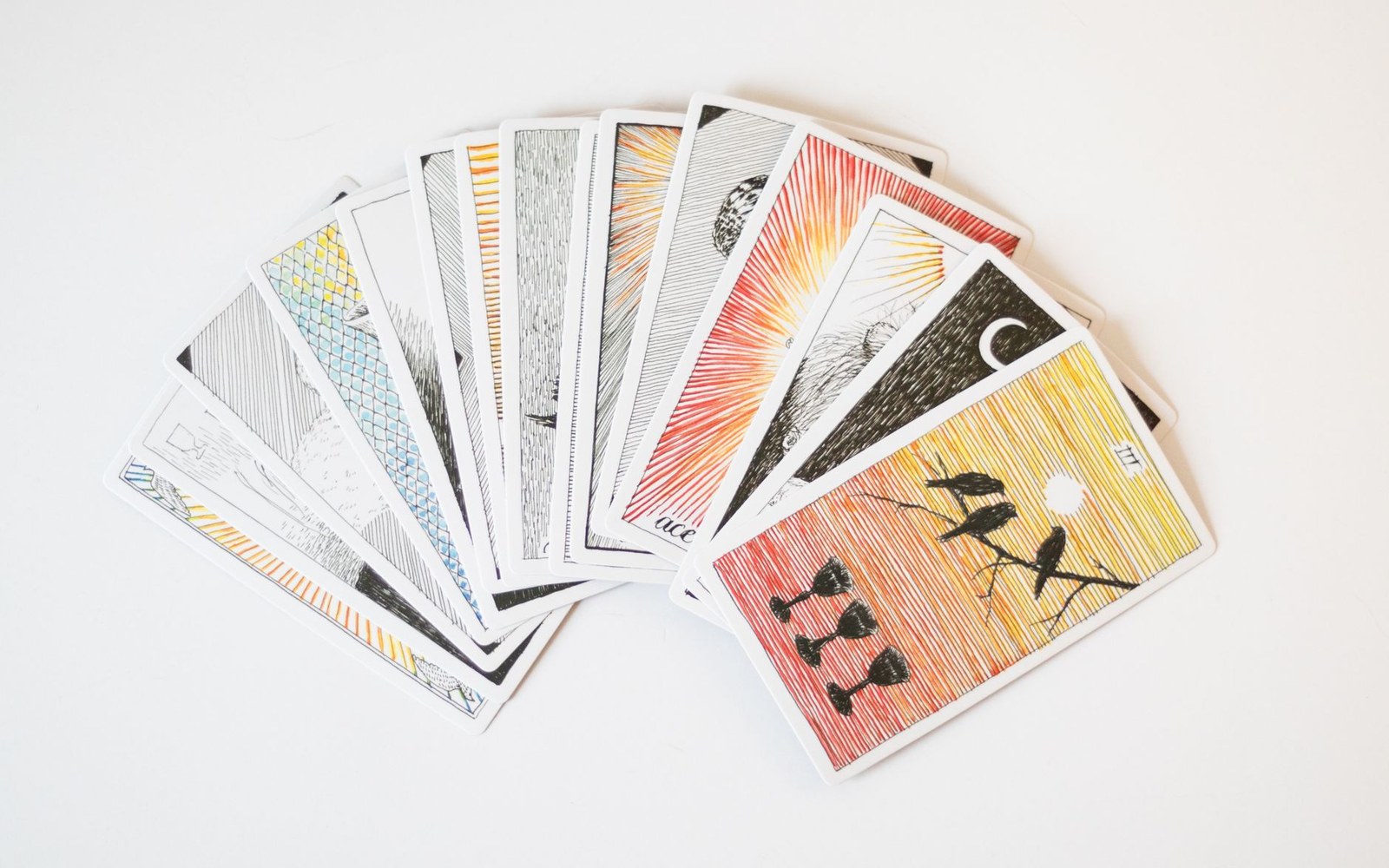
Finishes sell a crowdfunded deck: edge colour, foil, box and stock are all committed before a single unit exists.
Photo: Fiona Murray / Pexels
The Wall That Came Down in 2022
For most of tarot's publishing history, the economics were simple and brutal: lithographic or offset printing required minimum runs large enough to make the unit cost viable, and only established houses — U.S. Games Systems in Stamford, Lo Scarabeo in Turin, Llewellyn Worldwide, Naipes Heraclio Fournier in Vitoria-Gasteiz — could absorb the capital. An independent artist wanting to publish a deck faced the same problem as any independent publisher: a first run of, say, five hundred copies of a seventy-eight-card deck, printed on appropriate card stock with a tuck box, required money the artist did not have and a sales channel they could not guarantee. The result was a small, stable oligopoly.
Two things changed it. The first was Kickstarter, which launched in 2009 and gave creators a mechanism to pre-sell a print run before committing to the printer. The second, and structurally more consequential, was the expiry of UK copyright on the Rider-Waite-Smith images; in the United States the 1909 artwork had long since been in the public domain. The deck was first published in December 1909 by William Rider and Son in London, with artwork by Pamela Colman Smith; the UK copyright term, which runs seventy years from the death of the artist, lapsed on 1 January 2022, Smith having died in 1951. That date put the Smith pip innovations — the fully illustrated minor arcana that had defined the visual grammar of tarot for over a century — into the public domain in the United Kingdom and across Europe, free for reproduction, adaptation, and derivative use without licensing fees.
The combined effect was not gradual. Crowdfunding platforms recorded a measurable acceleration in tarot-related campaigns from 2022 onward, with hundreds of new decks appearing in a span of years that would previously have represented decades of catalogue growth. The majority were genuine artistic projects rather than reprints of legacy patterns: fresh illustration styles, non-European iconographic frameworks, queer and intersectional subject matter, genre hybrids (tarot-as-field-guide, tarot-as-zine), and regional artistic traditions that the major publishers had not attempted to represent.
The Arithmetic of a Crowdfunded Run
Understanding what the Kickstarter wave actually produced requires looking at the production economics it made workable. A standard tarot deck — seventy-eight cards plus two or three extras, printed on 300 gsm or 350 gsm coated card stock with a linen finish, cut to approximately 70 × 120 mm — costs roughly what any short-run specialty print job costs: the setup and make-ready are the expensive part, and the per-unit cost drops steeply as the run increases.
A run of 500 copies typically produces a unit cost somewhere between four and eight US dollars depending on specification, printer location, and card-stock choice; a run of 2,000 copies can halve that. A significant share of the world's tarot cards — including many sold under independent labels — are manufactured in Guangdong province, where printers such as Meisheng and Shuffled Ink (the latter actually based in Florida but printing offshore) became the standard vendor for crowdfunded campaigns by the mid-2010s. Chinese offset and UV-coating facilities, combined with lower labour costs, pushed minimum viable unit costs down to a level that a successful crowdfunding campaign could comfortably clear.
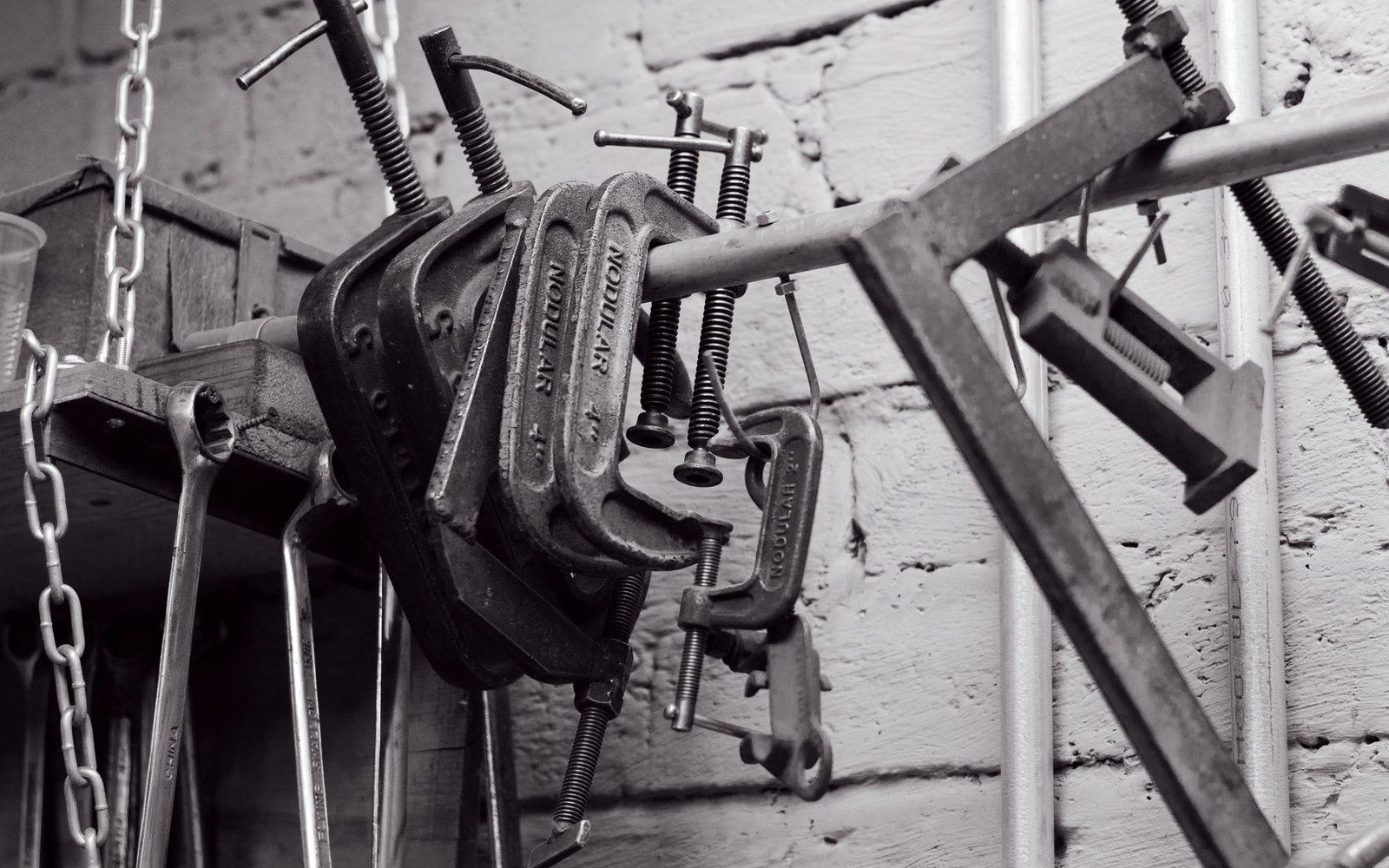
The clamp, not the press, is the tool that decides the retail price.
Photo: Miguel Á. Padriñán / Pexels
The campaign mathematics work as follows. An artist setting a funding goal for 500 units at a unit cost of six dollars needs to recover $3,000 in printing plus fulfilment — typically two to four dollars per backer for domestic US shipping and the cost of the padded mailer or tuck box — before any margin. A campaign offering a deck at thirty-five dollars a unit and attracting 200 backers generates $7,000 gross, enough to fund a 500-copy run, cover fulfilment, and leave the artist a meaningful surplus for the second print run. The tuck box itself, die-cut from a single board blank with a fold score for the flap, adds perhaps twenty to forty cents per unit at scale but represents a non-trivial design and tooling cost on a first run.
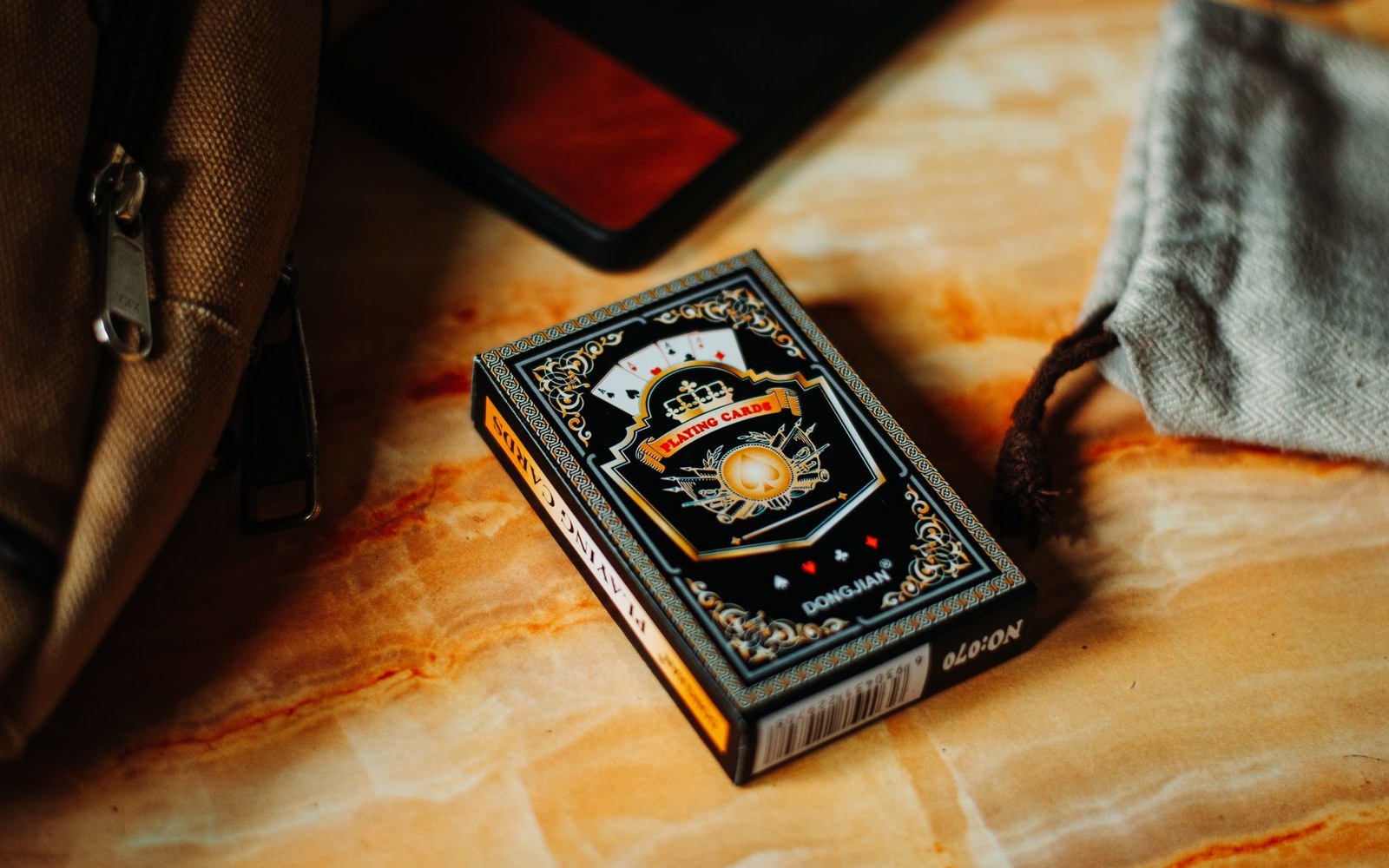
The score line at the flap is where a box fails, usually inside a year.
Photo: Jonathan Robles / Pexels
Gilt edges and specialty finishes — foil stamp on the box, embossing on the card back — alter the arithmetic substantially. A hand-applied gilt edge on a clamped block after cutting can double or more the finishing cost, a reality that has made the premium-tier crowdfunded deck a distinct product category: limited to perhaps 200 numbered copies, priced at seventy-five to a hundred and twenty dollars, and funded at the top tier of a campaign that also offers a standard edition. The standard tier funds the print run; the limited tier funds the margin and the artist's time.
Specific Decks, Specific Moments
Several decks that emerged from this wave are documentable as publishing objects. Lisa Sterle's Modern Witch Tarot, published in 2019 by Sterling Ethos, predates the public-domain shift but illustrates the model: Sterle's work placed the Smith compositions — the same fully illustrated pip cards that entered public domain three years later — into a contemporary aesthetic with visibly updated figure types, and sold through an established publisher rather than a campaign. Its commercial success demonstrated to independent artists that the template was broadly legible to new audiences.
Kim Krans's The Wild Unknown Tarot, self-published from 2012 before Harper Elixir picked it up in a trade edition in 2016, became the early proof of concept for the indie-to-mainstream pipeline: a campaign-scale print run that accumulated a following large enough to attract a major commercial publisher's interest. By the time the Harper edition appeared, the original self-published run had already sold out multiple times.
The post-2022 cohort is denser and more varied. Mecca Woods's The Cosmic Slumber Tarot, published through Clarkson Potter in 2022, landed at the intersection of the public-domain moment and mainstream publishing's appetite for the category. Independent artists working directly through Kickstarter in the same window produced decks grounded in Afro-diasporic visual culture, East Asian ink-painting traditions, and botanical illustration — subject areas where the major publishers had thin or no existing catalogue.
The structural novelty is not the existence of independent decks — hand-painted luxury tarot has existed since the Visconti commissions of the fifteenth century — but the combination of volume and accessibility. Kickstarter's own published data shows the Games category, which encompasses card-game and tarot campaigns, as one of its more consistently funded verticals. What changed after 2022 was the removal of the licensing friction on the dominant visual vocabulary: an artist could now draw directly from Smith's pip compositions, adapt them, argue with them, or simply use them as a starting point, without a letter to U.S. Games Systems.
The longer-term publishing consequence is a catalogue problem. The institutional archives that have historically documented tarot as a print object — the British Museum's playing-card collection, the Morgan Library, the Museo dei Tarocchi — were built around runs large enough to survive in multiple copies. A Kickstarter edition of 300 hand-numbered copies, fulfilled in padded mailers and never stocked by a distributor, may not reach any institutional collection. The record of the current wave is being written on hard drives and campaign archive pages, not in the kind of physical deposit that outlasts its decade.