Pl. 05THE DRAWING
Before 1909, the Pip Cards Were Blank
Pamela Colman Smith drew fifty-six scenes that had never existed before — and every tarot artist since has had to decide what to do about that.
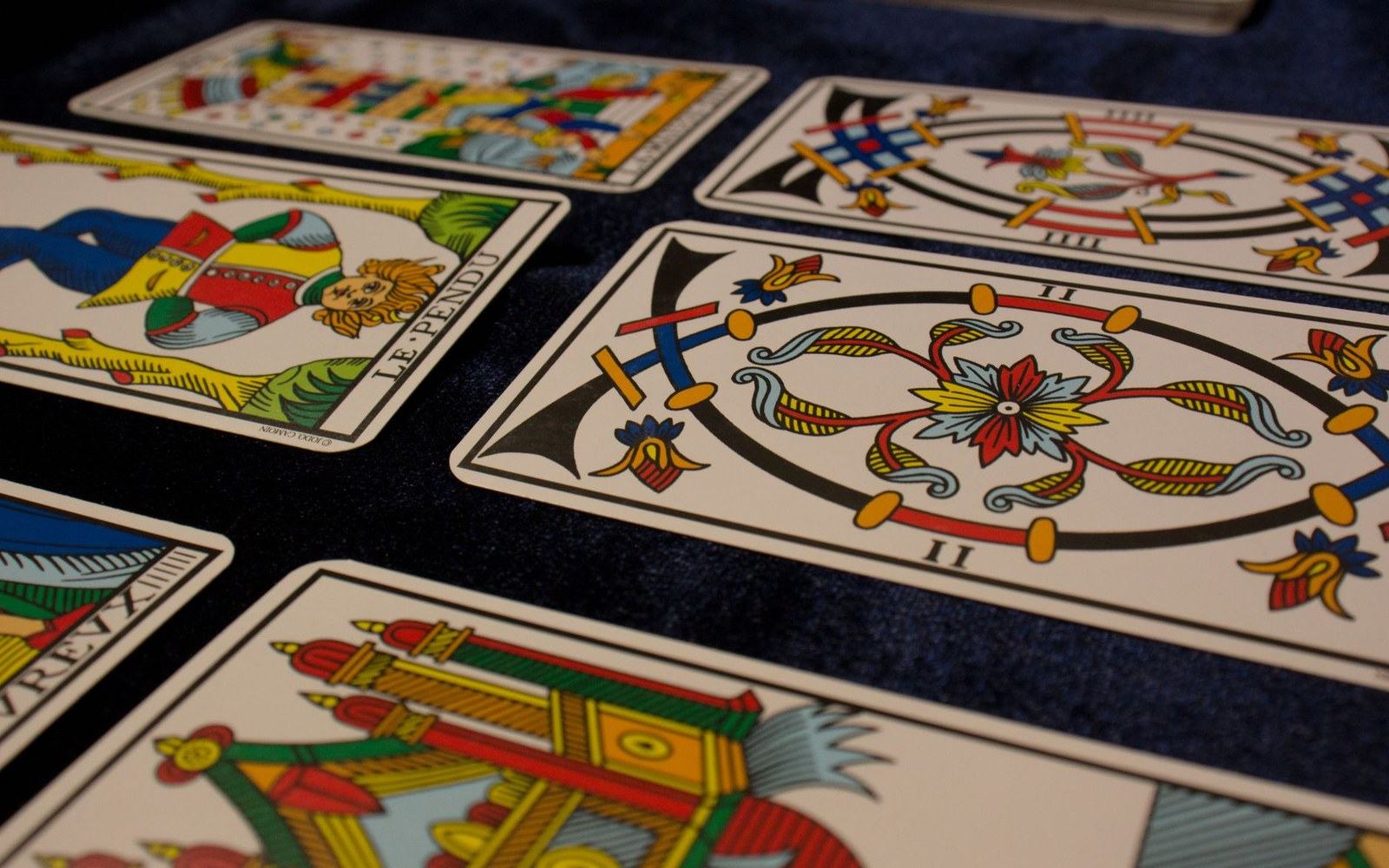
Before 1909 a numbered suit card looked like this: the symbol, repeated, arranged.
Photo: Pedro Rey / Pexels
The Unmarked Suits
For the better part of five centuries, the minor arcana of a tarot deck — the fifty-six suited cards divided into four suits — carried no figures at all. A seven of cups showed seven cups, arranged in a tidy geometric pattern. A five of swords showed five swords. The objects floated on a plain ground, sometimes decorated with a vine or ribbon, but fundamentally abstract: the suit symbol counted out, and nothing more.
This was not a limitation of the medium. Woodcut and copperplate could have carried scenes. The choice was functional: these were playing cards first, and pip cards — numbered suit cards without figural illustration — were faster to read in a card game than a picture. The tradition held from the earliest Italian packs through the Marseille pattern that dominated European printing from roughly the seventeenth century onward. When Naipes Heraclio Fournier pressed its Marseille-pattern sheets in the nineteenth century, the pips were still bare. The convention was essentially universal.
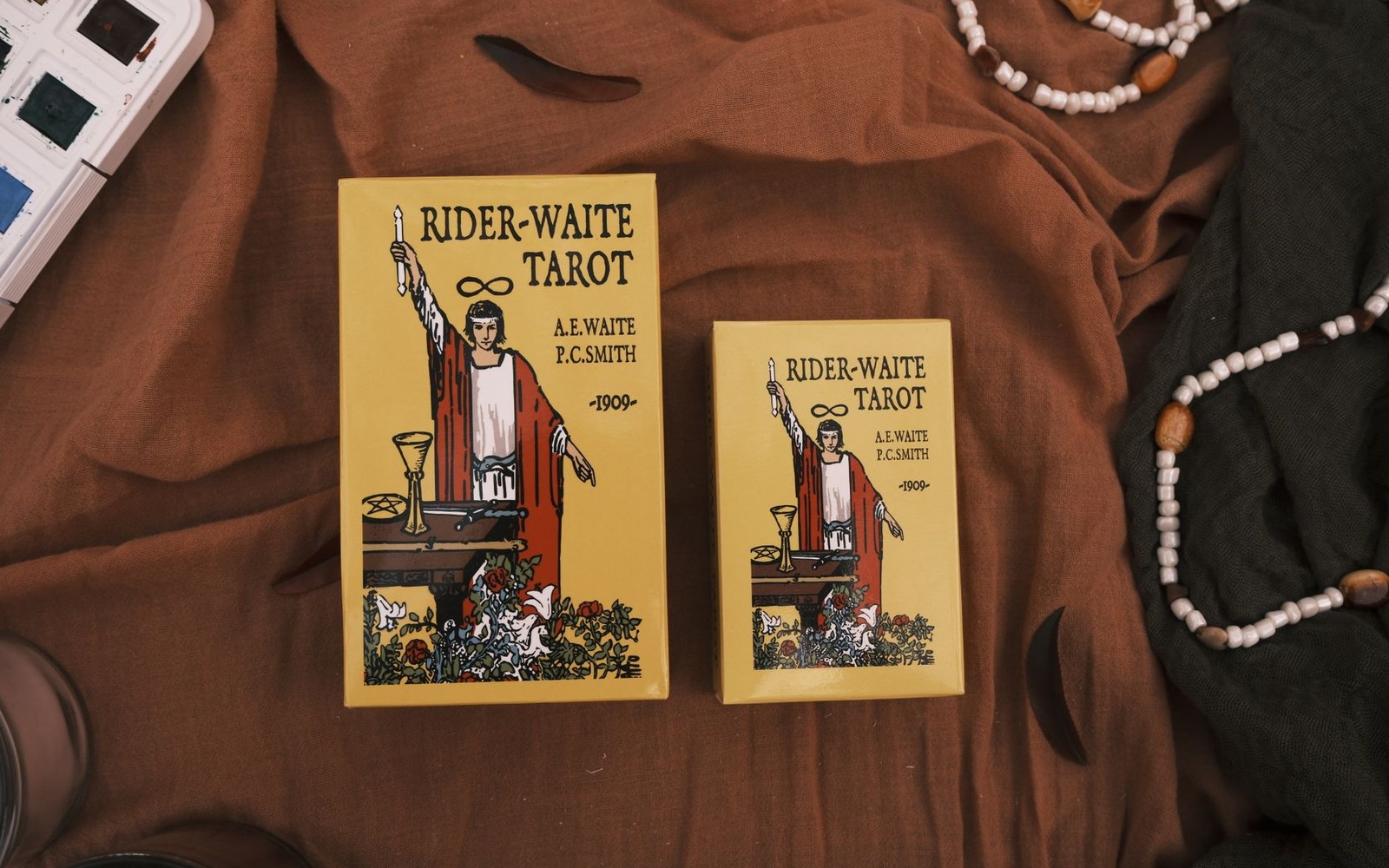
An early Rider printing. The illustrator’s name is not on the box.
Photo: dilara irem / Pexels
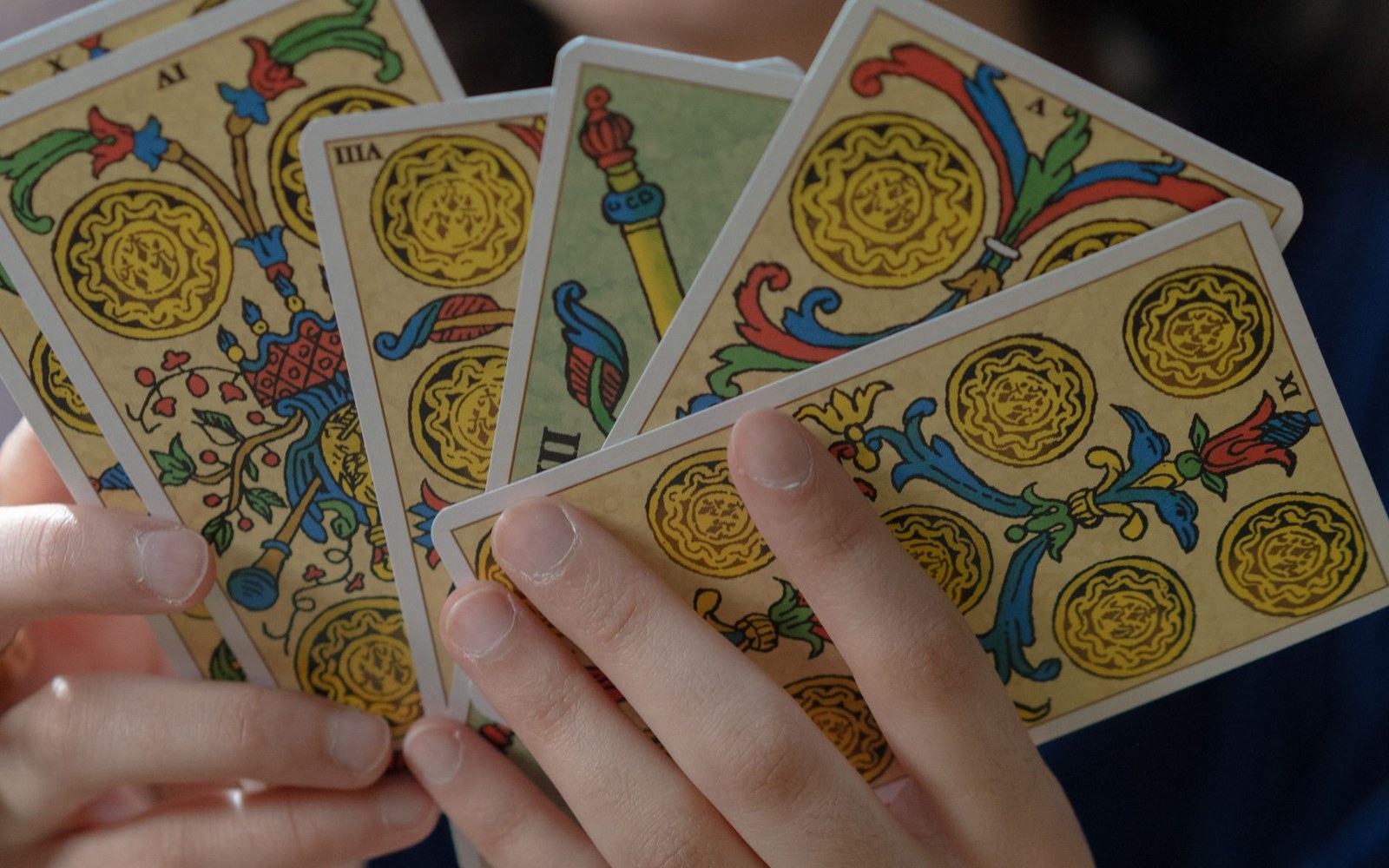
The 1491 pack’s numbered cards carry figures, which is the innovation the 1909 minors are usually credited with.
Photo: cottonbro studio / Pexels
What Smith Had to Invent
When Pamela Colman Smith received Arthur Edward Waite's commission in 1909, the instruction to fully illustrate the minor arcana created a design problem with almost no precedent and very few models. She had, for the major arcana, surviving iconographic tradition to consult — centuries of trump imagery to interpret or depart from. For the pip cards, the field was empty.
The Sola Busca pack of 1491, a fully illustrated seventy-eight-card deck, had been exhibited at the British Museum in 1907, and Smith had access to photographs of it. Some scholars have identified compositional parallels between Sola Busca figures and several of her minor arcana scenes — the Three of Swords in particular. But the Sola Busca was one anomaly in five centuries of unillustrated minors; it supplied at most a handful of starting points. The remaining fifty-odd scenes she constructed from nothing recognizable in the card tradition.
She was trained at the Pratt Institute in Brooklyn and had illustrated books, designed theater posters, and produced watercolors that Stieglitz showed at 291 Gallery. She brought those skills, not a card-playing tradition, to the work. The result — published by William Rider and Son in December 1909 — embedded a scene in every numbered suit card and made those scenes the new default.
The Template Every Designer Answers
U.S. Games Systems, Lo Scarabeo, Llewellyn Worldwide, and the wave of independent Kickstarter publishers that followed: every deck that calls itself a tarot in the illustrated-minor tradition is replying to Smith's fifty-six inventions. Some decks return deliberately to the unmarked pip as an aesthetic or historical statement. The rest are all working from her template, whether or not they know it.