Pl. 02THE PRESS
The Tuck Box Is the Part That Fails First
The cards inside a deck routinely outlast the box they came in — a consequence of engineering decisions made at print, not at the shelf.
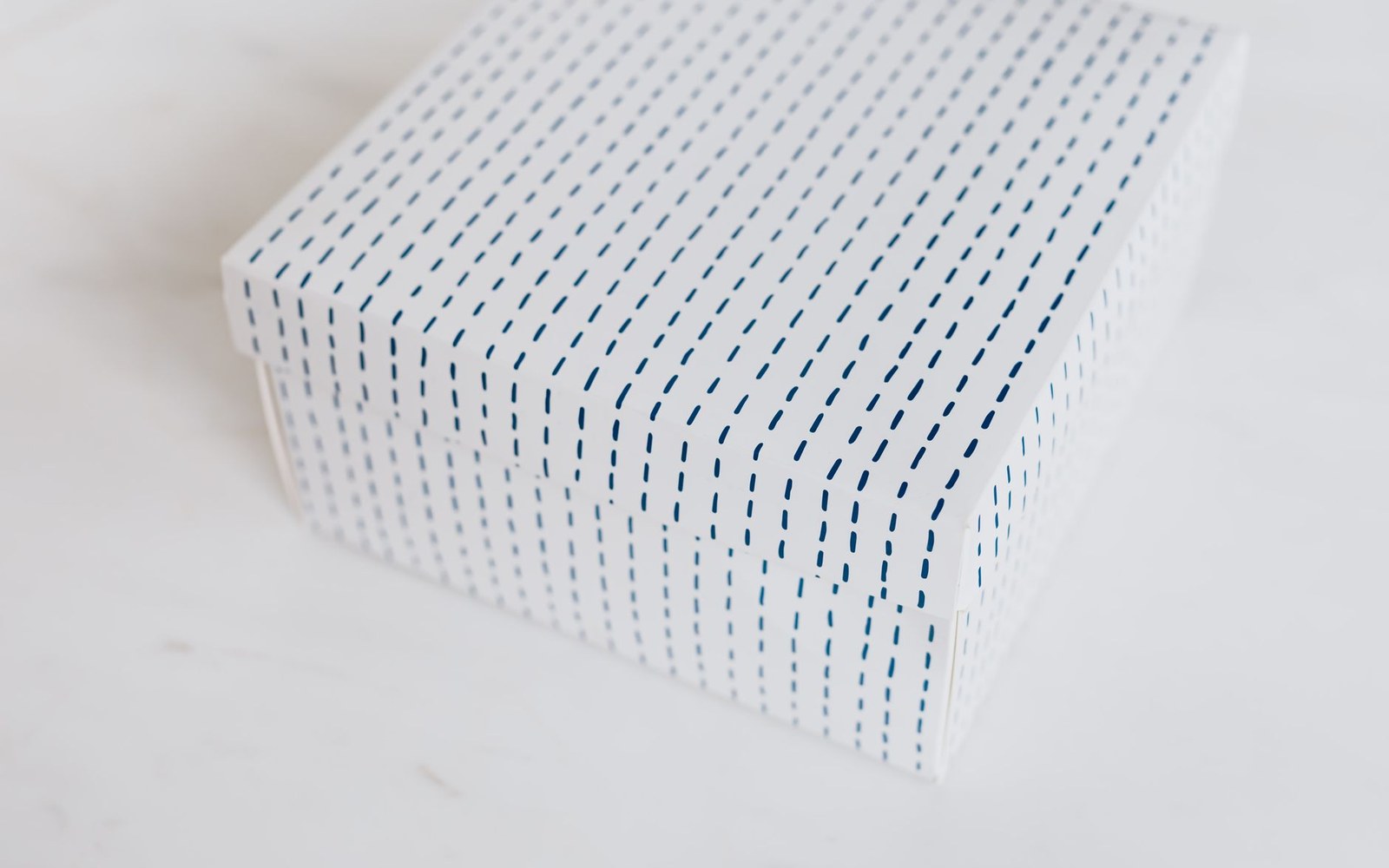
Board weight and grain direction are specified before the artwork is finished.
Photo: Kaboompics / Pexels
Three Decisions That Determine Lifespan
A tuck box — the slotted folding carton assembled from a single die-cut board blank — is specified by three variables: board weight, grain direction, and flap geometry. Packaging engineers who work with playing-card manufacturers treat all three as interdependent. Publishers frequently do not, and the box fails first.
Board weight is the most visible choice. A standard tarot deck contains seventy-eight cards printed on stock that typically runs between 300 and 350 gsm (grams per square metre) after lamination. The tuck box surrounding them is commonly specified at 350–400 gsm uncoated board — barely heavier than the cards it encloses. Because the box undergoes repeated mechanical stress — flap insertion, flap extraction, the lateral compression of a full deck — it fatigues faster than any single card. Printers producing high volumes in Guangdong, where a large share of the world's tarot cards are manufactured, work to client specifications rather than against them; a publisher who underspecifies saves a fraction of a cent per unit and pays for it in returns.

The score line at the flap is where a box fails, usually inside a year.
Photo: Jonathan Robles / Pexels

Retail is what sets the ceiling on unit cost.
Photo: cottonbro studio / Pexels
Grain direction governs how the board flexes. Paper and board fibres align during manufacture in one predominant direction; a tuck box cut against the grain at its fold lines will crack at the score within months of regular handling. Correct specification runs the grain parallel to the box's vertical axis, so the flap hinge opens cleanly rather than splitting. This is not an obscure refinement — it is taught in the first week of packaging courses — yet documented complaints about tarot packaging consistently describe split hinges and collapsed side panels rather than card damage.
Flap geometry is the third lever. A short, shallow tuck flap holds by friction alone; a deeper flap with a retaining notch holds by geometry. The depth required to retain a full deck is roughly one-third of the box's interior width. Shorter flaps reduce board use by a measurable amount per thousand units — a real cost saving that becomes a real product failure once the deck has been opened and closed twenty times.
The cards inside are often printed to last decades. The box, underspecified by the same press run, rarely survives the year.