Pl. 03COLLECTIONS
The British Museum's Playing-Card Collection
One of the largest systematically catalogued archives of historical playing cards in the world sits in Bloomsbury — and its tarot holdings have shaped the documented record of the medium.
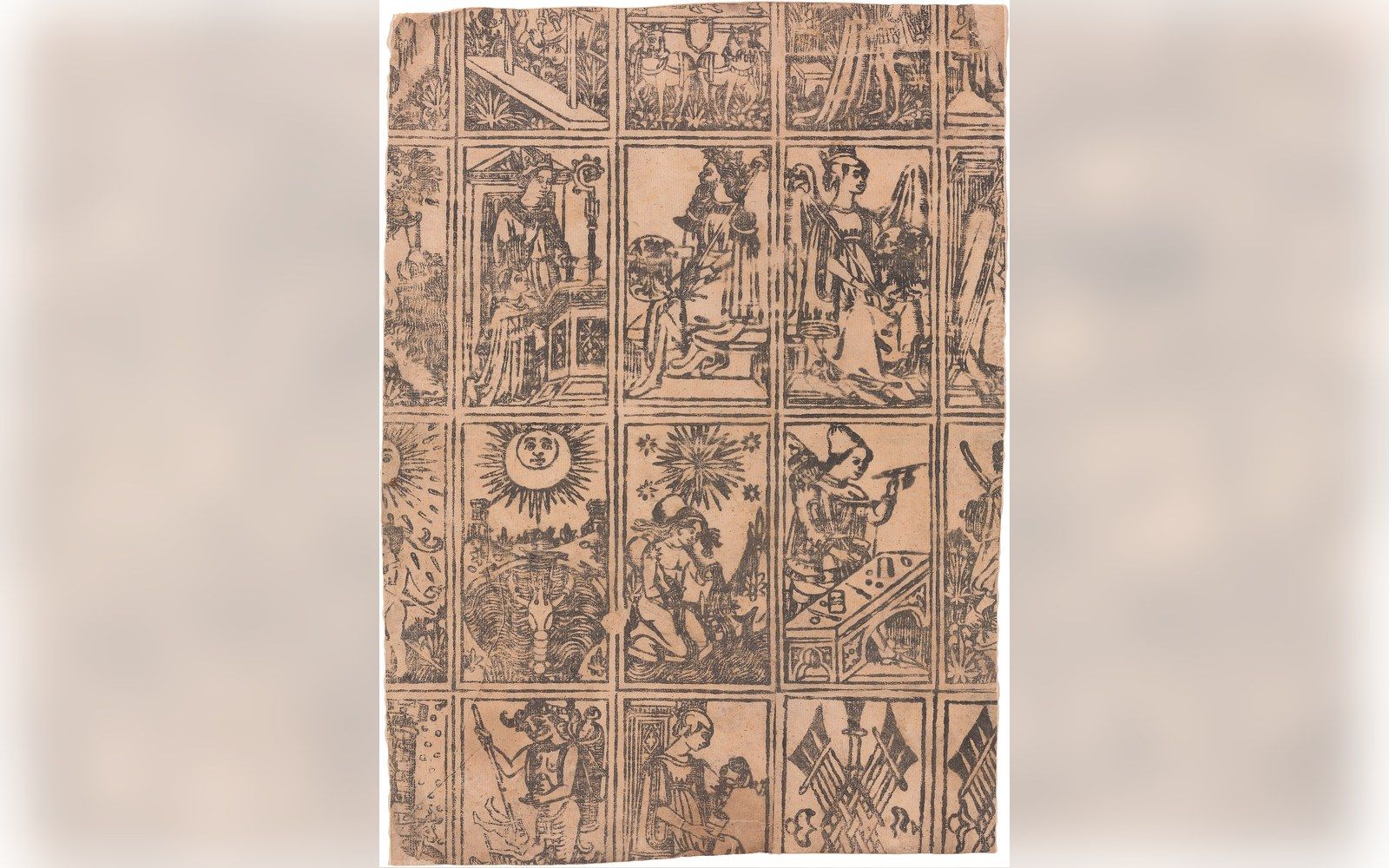
An uncut Italian sheet, c.1500. The collection’s strength is production, not play.
Photo: Cary Collection, Beinecke Library, Yale University · Wikimedia Commons
What the Collection Contains
The British Museum's Department of Prints and Drawings holds several thousand playing cards spanning roughly six centuries and dozens of national traditions. The collection encompasses woodcut and engraved packs, hand-coloured sheets, single surviving cards extracted from bookbindings, and near-complete decks of documentary importance. Because the Museum acquired material steadily from the eighteenth century onward, the holdings reflect the priorities of successive curators rather than a single founding bequest, giving the archive unusual breadth across printing techniques and regional traditions.
Among the tarot material, the collection includes examples of the Marseille pattern — the standardised French woodcut design that dominated European card printing from the seventeenth century into the nineteenth — as well as earlier Italian material that bears directly on the question of how trump cards (the major arcana, numbered 0 through 21) were pictorially fixed across different centres of production. The collection also holds early German and Flemish packs whose suit systems predate the French standardisation, making it an essential comparative resource for tracing how card imagery migrated across printing cultures.
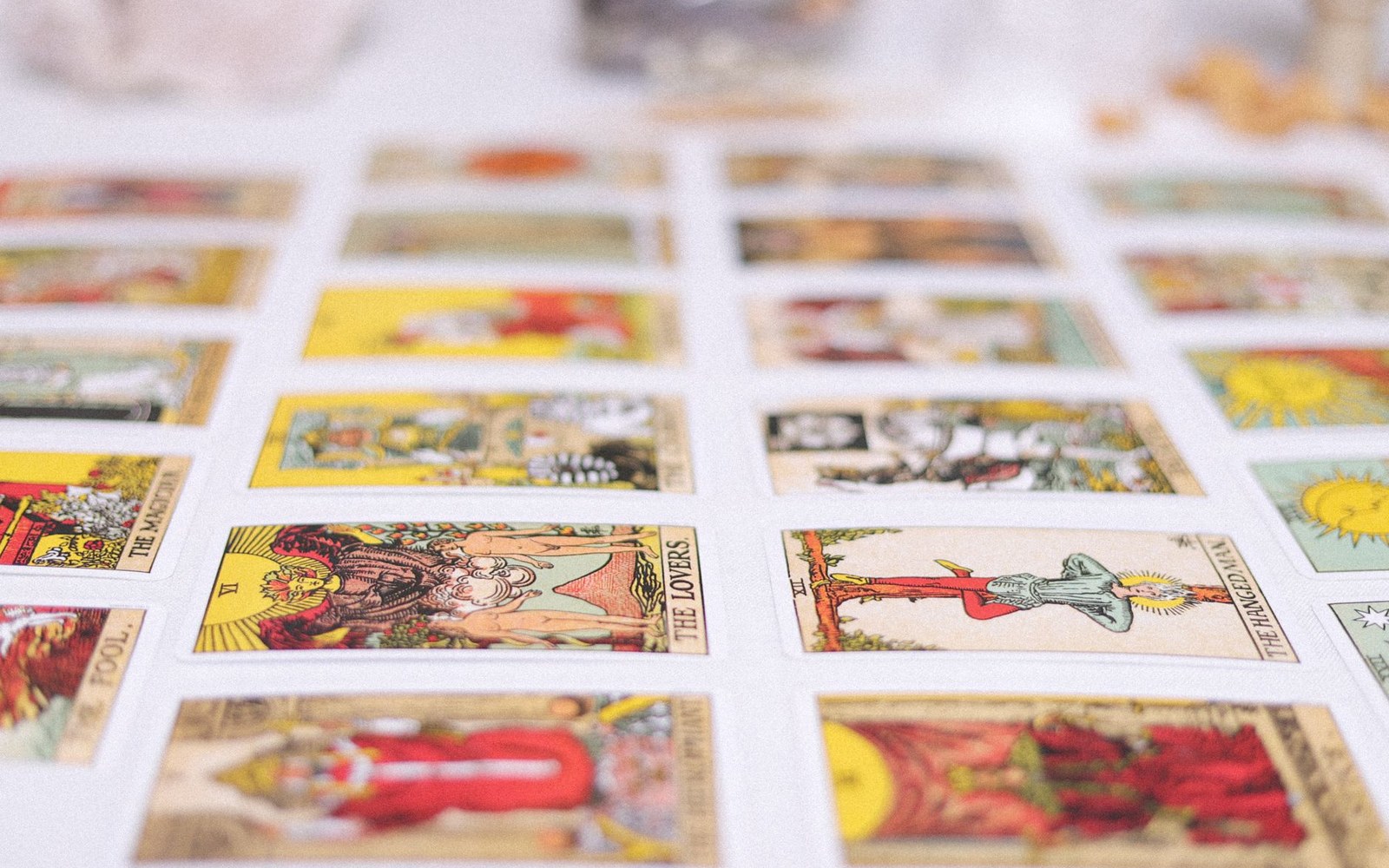
Seventy-eight faces come off one sheet. Everything after it — guillotine, corner round, tuck box — is a separate operation carrying its own setup cost, which is why short runs stay expensive.
Photo: Natalie Goodwin / Pexels
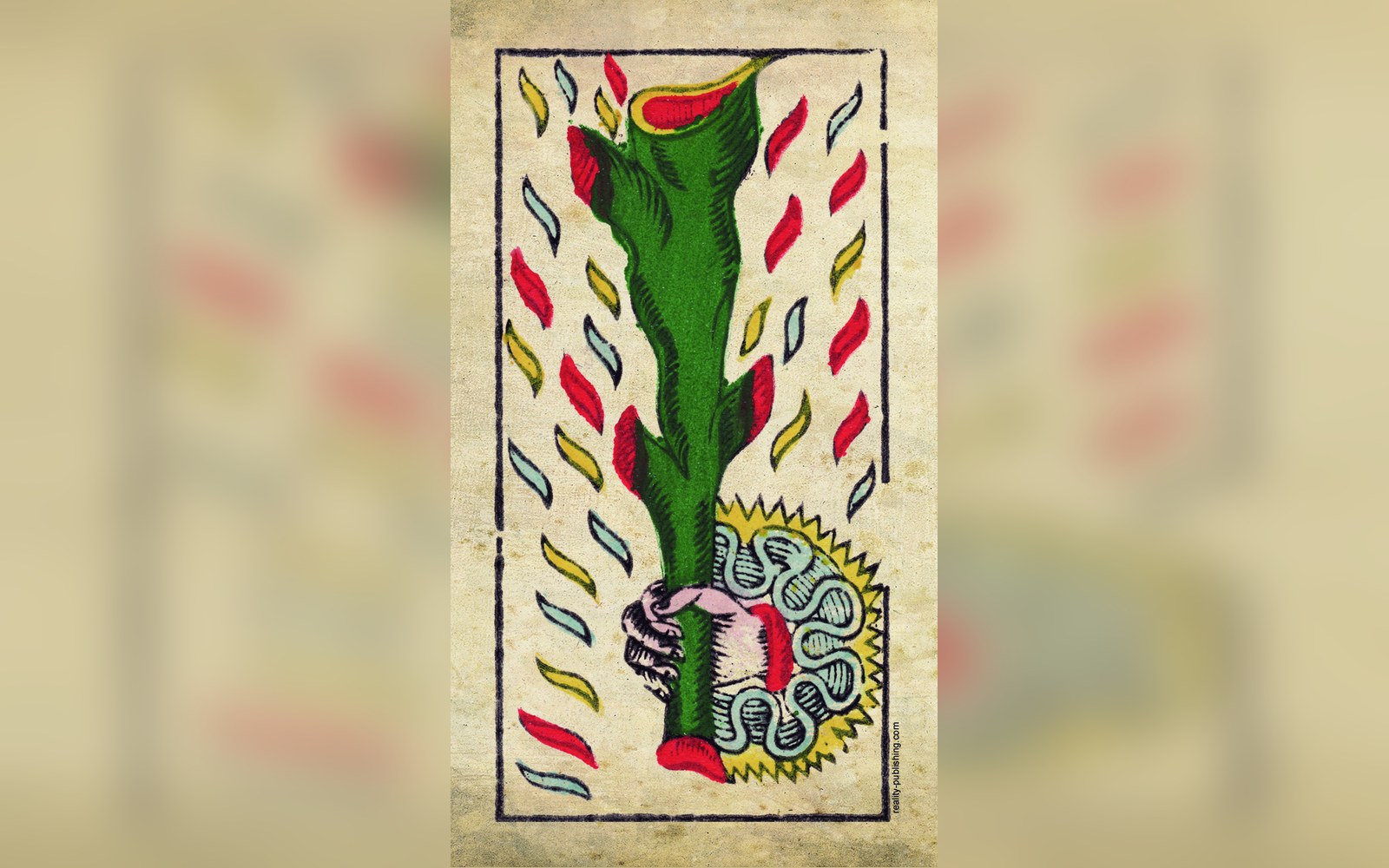
A pull from the Conver line — the Ace of Batons, still in print.
Photo: Wikimedia Commons
The Museum's online collection database, maintained through the British Museum's own catalogue, allows researchers to search playing-card holdings by date, region, and printing technique — a searchability that has made the archive accessible to scholars working outside London. Catalogue records typically specify medium, dimensions, condition, and acquisition history, the kind of granular documentation that underpins serious print-history research.
The Archive and the Wider Record
What the British Museum's collection has contributed to tarot history is largely a matter of dateable physical evidence. Woodcut cards can be stylistically dated; paper stock and watermarks carry further evidence of production origin. The Mamluk pack held at the Topkapı Sarayı Museum in Istanbul is the more celebrated early ancestor, but the British Museum's European holdings provide the intermediate documentary layer — the printed evidence of how Islamic card conventions were absorbed and transformed by European workshops between the fifteenth and seventeenth centuries.
The collection is not primarily a tarot collection. Tarot constitutes a minority of its cards. But because it is catalogued within a comprehensive survey of playing-card history as printed matter, its tarot items are contextualised against the full range of European card production — which is exactly the kind of context that establishes when pictorial conventions appeared, where they came from, and how printers reproduced or altered them.