Pl. 04THE PRESS
Lo Scarabeo Has Printed in Turin Since 1987
A Turin press built its catalogue on historical reproduction and licensed art, and now distributes to a global market from a single facility in Piedmont.

The Turin press’s own mark.
Photo: loscarabeo.com
The House and Its Model
Lo Scarabeo was founded in Turin in 1987, entering a European card market already dominated by French and Spanish manufacturers. Rather than competing on playing-card volume, it built its identity around the tarot specifically — producing licensed reproductions of historical decks alongside original artist commissions. That catalogue logic has proved durable: by the 2020s the company held several hundred titles in active print, a range no comparable single-country publisher has matched.
The reproduction side of the list draws on decks whose original artwork has passed into public domain, allowing Lo Scarabeo to set new type, redraw faded line work, and reprint under its own imprint without licensing fees. The Tarot de Marseille pattern and the early Piedmontese variants are natural territory for a Turin house; the company has also reproduced Egyptian-themed and medieval-revival decks that circulated widely in the nineteenth century. For original commissions, Lo Scarabeo contracts illustrators directly and holds the resulting artwork under its own copyright.
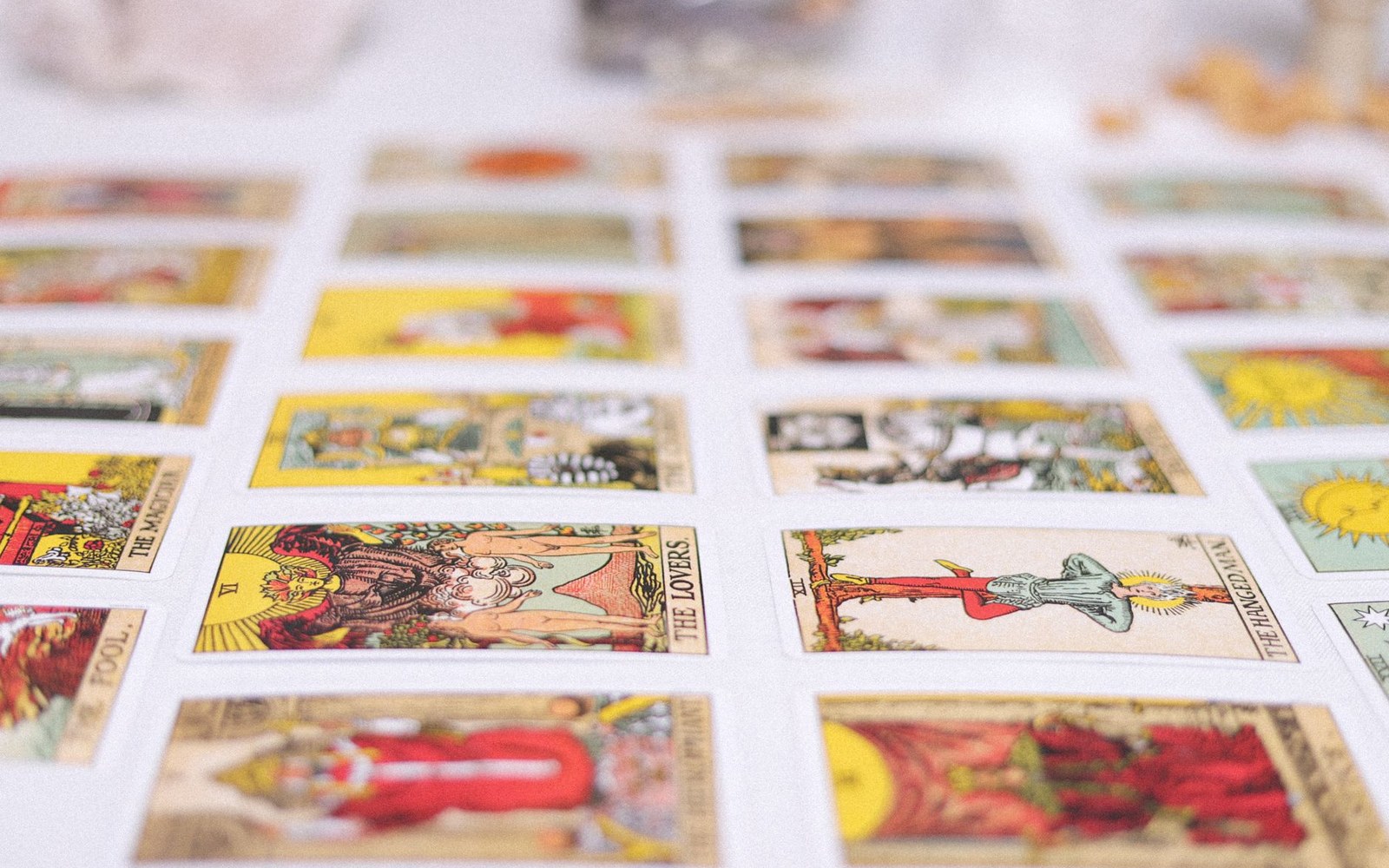
Seventy-eight faces come off one sheet. Everything after it — guillotine, corner round, tuck box — is a separate operation carrying its own setup cost, which is why short runs stay expensive.
Photo: Natalie Goodwin / Pexels
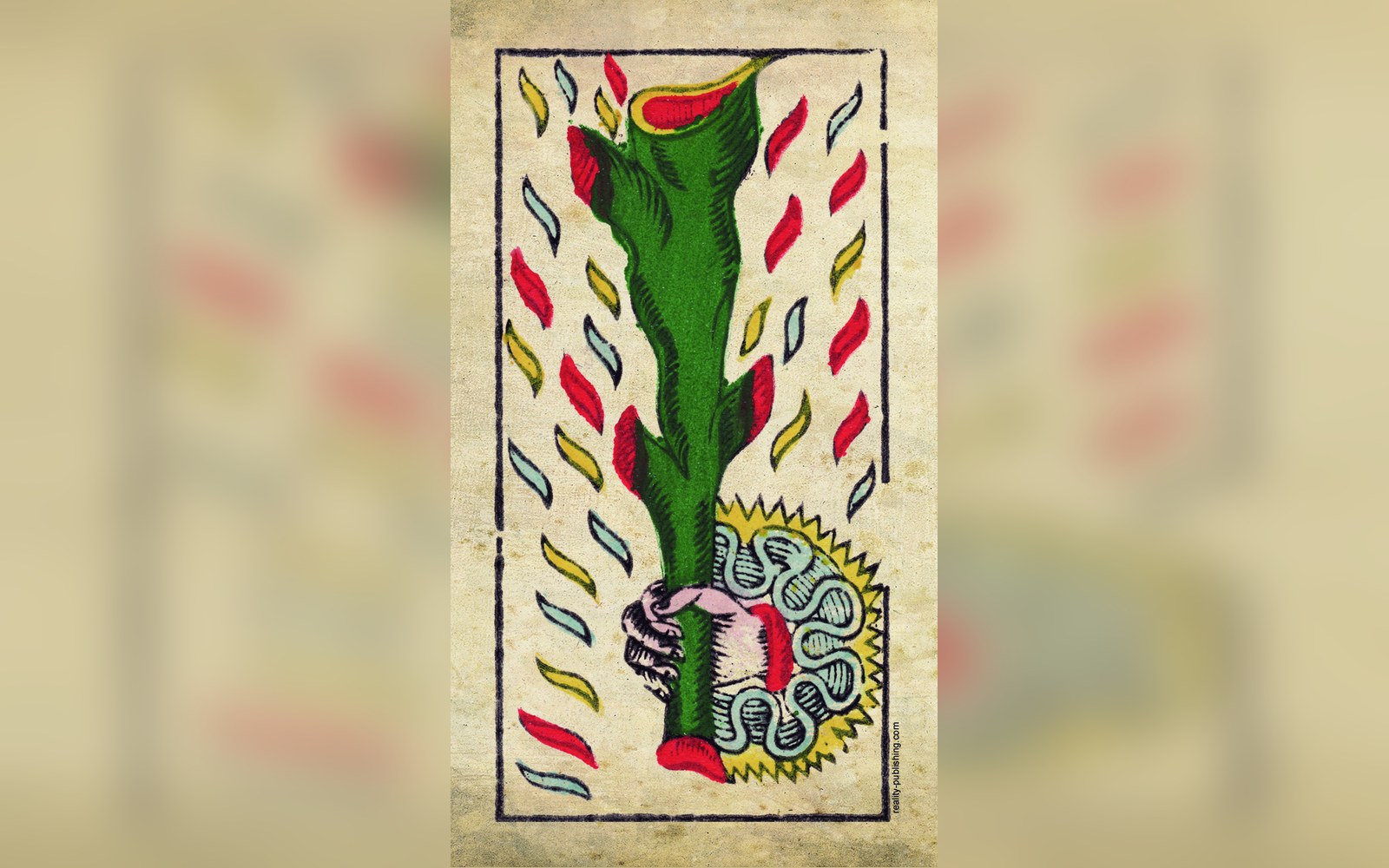
A pull from the Conver line — the Ace of Batons, still in print.
Photo: Nicolas Conver Tarot, 1760 · Wikimedia Commons
Manufacturing and Distribution
All production passes through the Turin facility. Card stock is printed offset, cut to the standard European tarot format — somewhat larger than the Anglo-American format popularised after 1909 — and finished in-house before packing into tuck boxes. The company supplies to distributors across Europe and North America; U.S. Games Systems, based in Stamford, Connecticut, has at various points carried Lo Scarabeo titles in the American market, though the two operate as separate commercial entities.
Lo Scarabeo's position in the global supply chain is unusual: where most mid-volume publishers in the United States and northern Europe contract printing to Guangdong facilities, Lo Scarabeo keeps manufacture in Piedmont. That choice carries cost implications — European labour and materials run higher — but it allows the company to maintain tighter control over colour fidelity on reproduction work, where matching aged source material matters to collectors.
The Catalogue as Argument
The breadth of the list functions as an implicit editorial position: that tarot is a printable tradition worth documenting in facsimile as much as reinventing through new art. Individual titles vary considerably in press quality and in the rigour of their historical sourcing, and specialist collectors have noted inconsistencies in how faithfully certain reproductions track their originals. Those caveats aside, no other press has assembled as wide a documented survey of the deck's five-century print history under a single commercial imprint operating continuously from a single city.