Pl. 01THE PRESS
Why a Gilt Edge Drives Up the Unit Cost
Foil and pressure applied by hand after the cut: how one finishing step accounts for the largest single price gap between a standard and a luxury deck.

The clamp, not the press, is the tool that decides the retail price.
Photo: Miguel Á. Padriñán / Pexels
The Operation Itself
A gilt edge — the strip of gold or metallic pigment coating the trimmed sides of a card block — is applied after the deck has been printed, die-cut, and collated. The cards are stacked, clamped in a hydraulic or screw press to hold the block rigid and compress the stack to an even face, and then a specialist applies the metallic coating to the exposed edge. The two main methods are burnished leaf, in which genuine or imitation gold leaf is laid and polished by hand, and foil or powder application, in which a metallic medium is rolled or brushed onto the compressed block and sealed. Both require the deck to be held immobile and returned to a press several times — once per edge treated, since only one face of the block can be gilded at a pass.
The operation cannot be meaningfully automated at the deck scale that most specialty printers run. Large commercial gilt operations exist for hardcover book editions printed in the tens of thousands, but a tarot deck sits in an awkward middle range: too short a run for a bespoke automated line, too unlike a book block (a stack of loose, stiff cards rather than bound paper) for standard book-gilding jigs without custom tooling. The work remains a hand station.
Where the Cost Accumulates
At a standard deck print run of two thousand to five thousand units — typical for an independent or mid-market release — the gilding adds labour time that prints through to the unit cost more harshly than almost any other finishing step. Printing industry cost analyses consistently place hand-finishing operations as the steepest per-unit line items in short-run specialty production, because the labour component does not amortise the way press time or plate fees do.
A rough accounting of where the money goes: the press run itself — offset or digital, depending on the edition — is typically the largest absolute cost but spreads across all units. Die-cutting, lamination, and tuck box construction are similarly scalable. Gilding, by contrast, is priced almost entirely per deck, because each block must be individually clamped, treated, and released. Industry estimates for professional edge-gilding services place the operation at anywhere from a few dollars per deck at volume to substantially more for short runs with multiple treated edges.
Most luxury decks gild only the long edges of the card; treating all four sides requires an additional clamping pass and raises the cost again. Some publishers compromise with a single top-edge gilt, visible when the deck is boxed — enough visual register of luxury without the full labour of all-edge treatment.
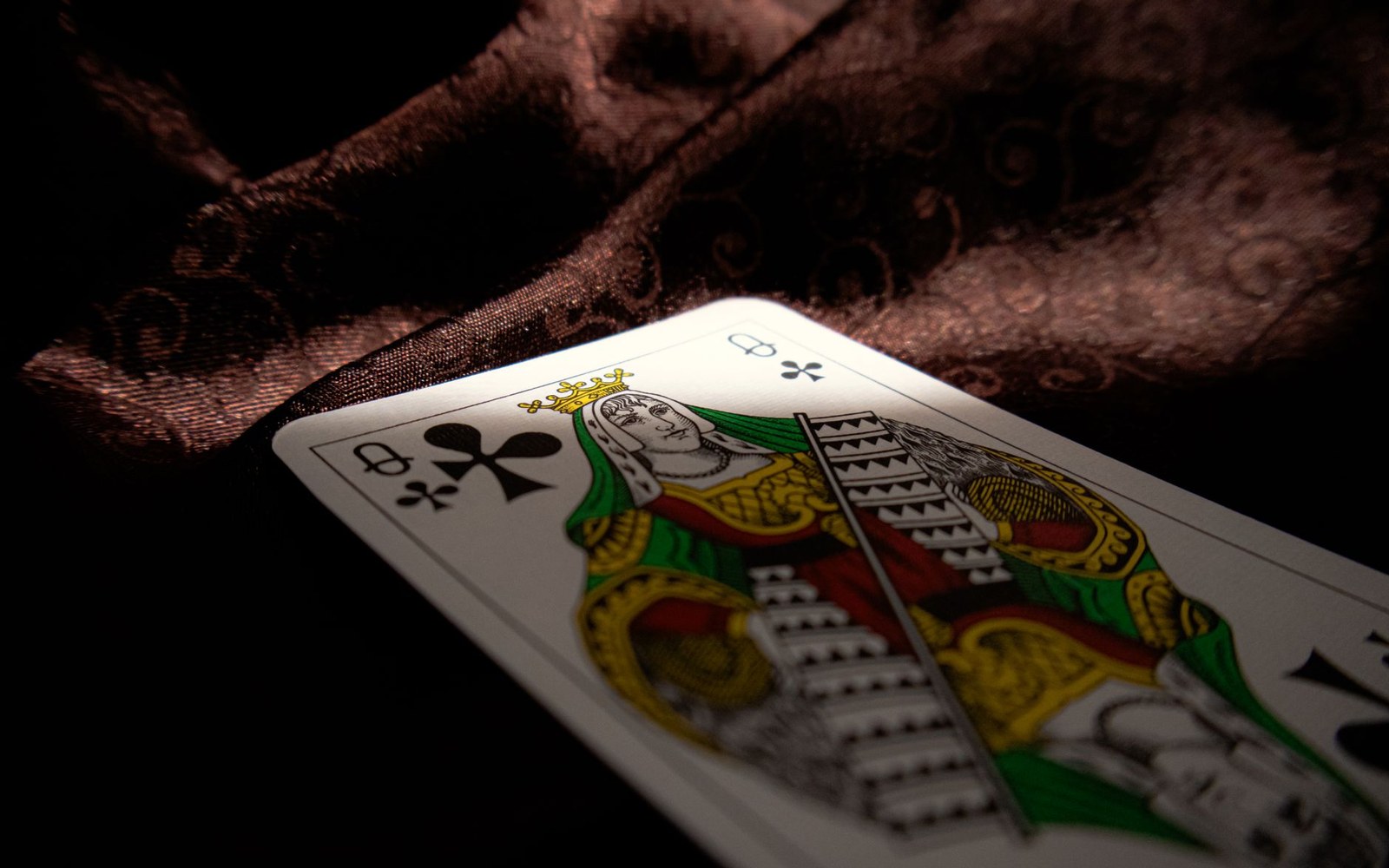
Gilding is applied to the closed block, never to a single card.
Photo: Yeşim Çolak / Pexels
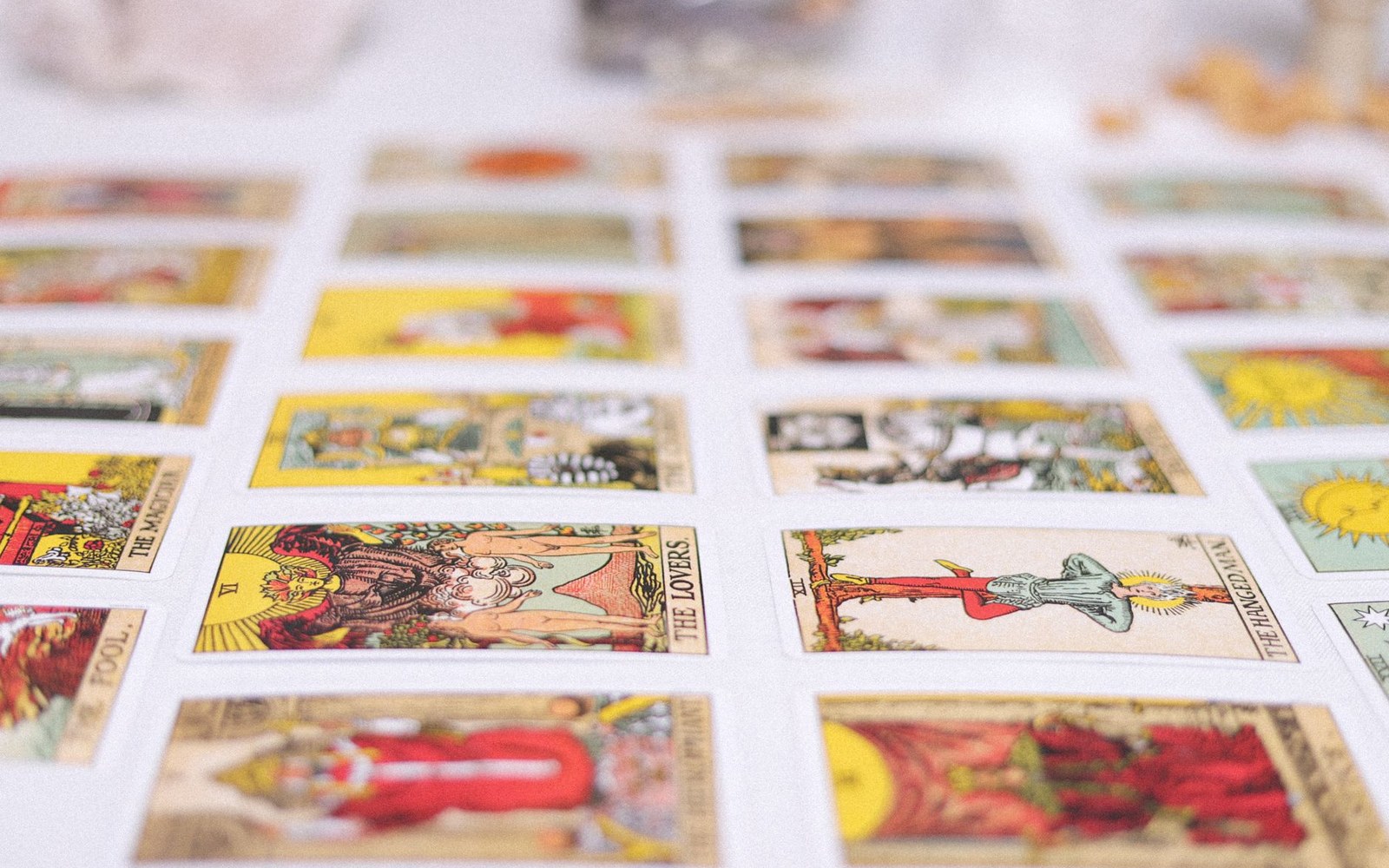
Seventy-eight faces come off one sheet. Everything after it — guillotine, corner round, tuck box — is a separate operation carrying its own setup cost, which is why short runs stay expensive.
Photo: Natalie Goodwin / Pexels
What the Printer Charges For
The specific costs are: setup of the clamping jig (once per run), labour time per block, the gilding medium itself (gold leaf being more expensive than metallic powder or foil tape), and any rework on cards that shift in the press and take an uneven line. Metallic powder and roll-on foil have largely displaced genuine gold leaf in commercial deck production; the Printing Industries of America tracks finishing technologies, and powder-and-burnish is now the dominant method for production gilding on specialty card products.
The card stock specification matters too: a coarser or more porous stock absorbs gilding medium unevenly, requiring an additional sealing pass. Most publishers specifying a gilt edge also upgrade their card stock, because the gilding will not look clean on a cheaper substrate — and that stock upgrade carries its own cost increase.
The result is a compounding effect. A deck that might otherwise retail in one price tier acquires a gilt edge and immediately crosses into the next: the edge gilding alone, combined with the stock required to carry it well, can account for the majority of the gap. Producers who have itemised their costs publicly describe the edge treatment as the single line item they debate longest — the one that most clearly defines whether a deck is a standard edition or something else.