Pl. 03THE PRESS
Stuart Kaplan Founded U.S. Games Systems in 1968
The Stamford, Connecticut publisher became the dominant English-language tarot house by acquiring rights, building catalogue depth, and riding a decade of extraordinary market growth.
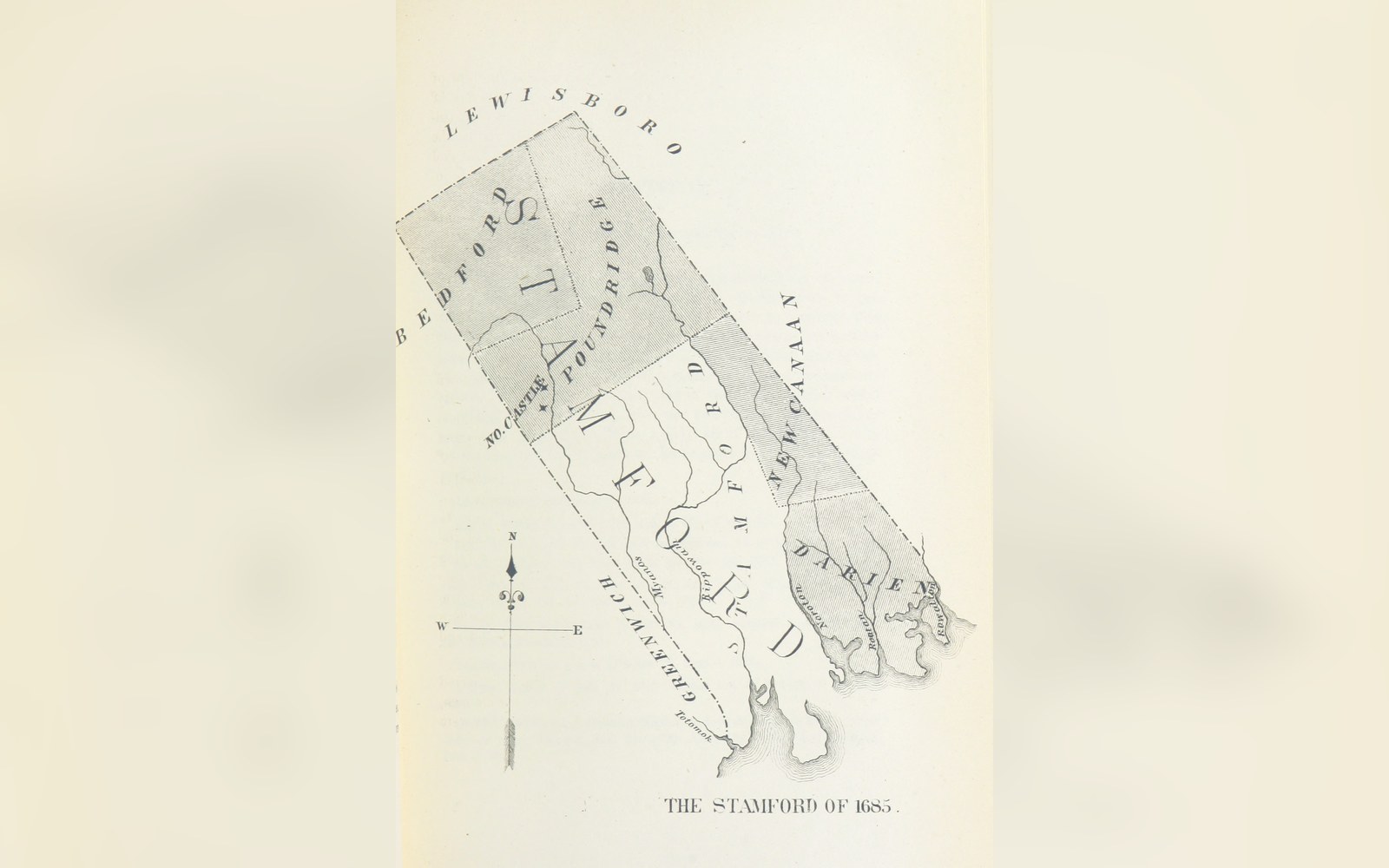
Stamford, Connecticut, before it was a publishing address.
Photo: 173 of 'History of Stamford, Connecticut, etc' · Wikimedia Commons
From Games Importer to Tarot Publisher
Stuart Kaplan established U.S. Games Systems in 1968, initially as an importer and distributor of European card games and board games. The tarot connection came almost incidentally: while attending the 1968 Nuremberg Toy Fair, Kaplan encountered an edition of the Rider-Waite-Smith deck — the pack first issued by William Rider and Son in London in December 1909 — and recognised that it had no serious American distributor. He licensed it, brought it into the U.S. market, and within a few years had reoriented the company around tarot entirely.
The timing was commercially exact. The early 1970s saw a surge of popular interest in occult subjects across the English-speaking world — astrology paperbacks, I Ching editions, and tarot guides crowded the same spinner racks. Publishers who had inventory and confidence moved fast. Kaplan had both. U.S. Games Systems issued its own edition of the Rider-Waite-Smith deck alongside a growing library of companion texts, including Kaplan's own encyclopedic reference works, and built a catalogue that no competitor in the American market could match for depth.
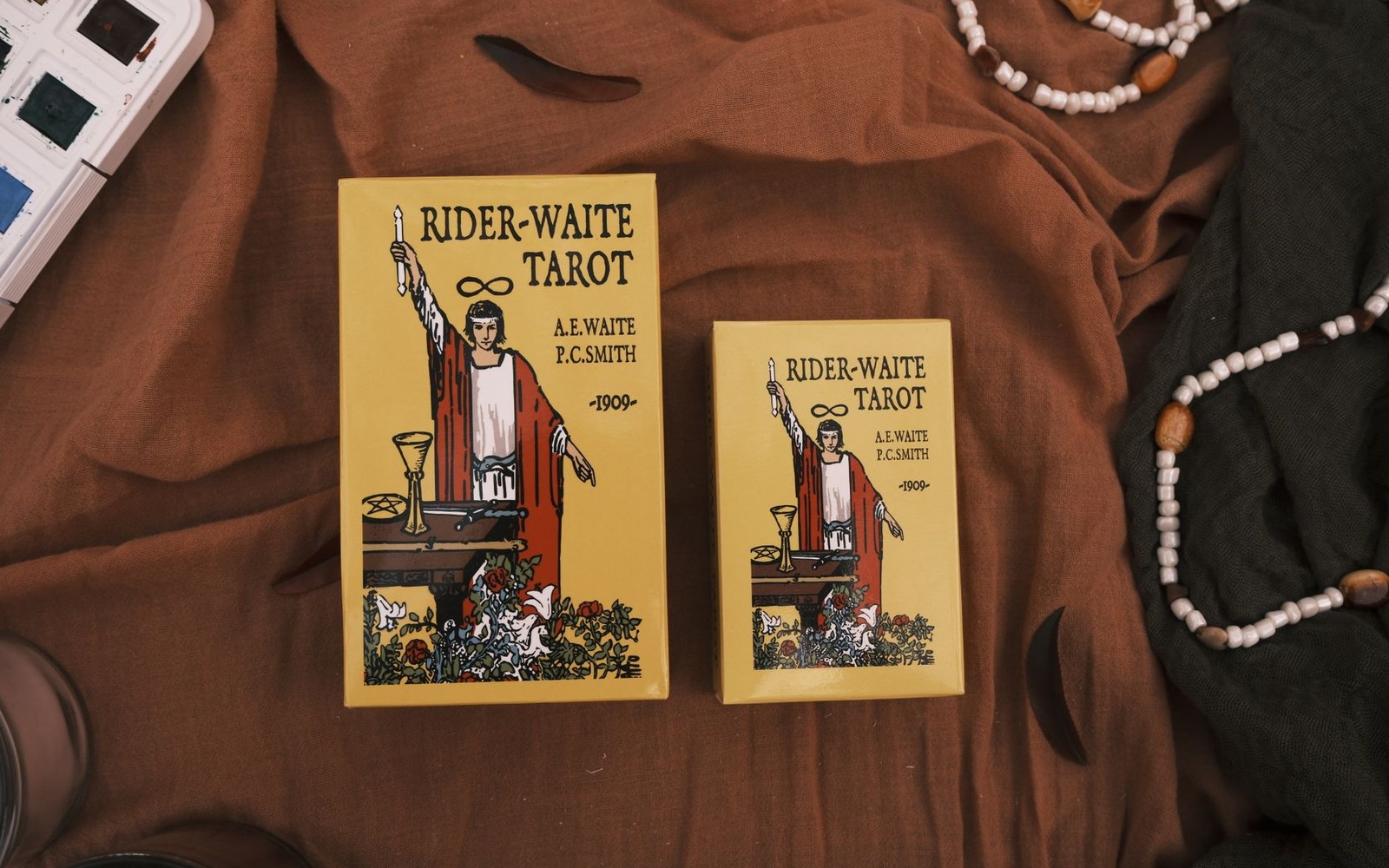
An early Rider printing. The illustrator’s name is not on the box.
Photo: dilara irem / Pexels

Retail is what sets the ceiling on unit cost.
Photo: cottonbro studio / Pexels
The Copyright and Trade Dress Position
The legal situation around the Rider-Waite-Smith imagery is one of the more consequential questions in tarot publishing history. Pamela Colman Smith was paid a flat fee for her artwork in 1909 and held no ongoing rights; the original publisher, William Rider and Son, retained the copyright. By the time U.S. Games Systems entered the picture, the precise status of that copyright — what had lapsed, what had been renewed, what remained protectable under British and American law — was contested territory. U.S. Games Systems has consistently maintained proprietary claims over its specific edition of the deck, and the trade dress of its packaging and card back design functions as a legally distinct layer of protection, regardless of the underlying image copyright question.
The practical effect is that the Kickstarter and indie-press wave of the 2010s, built substantially on the argument that the RWS images had entered the public domain, operated in explicit tension with the U.S. Games Systems position. Independent creators and small publishers produced hundreds of decks drawing on Smith's iconography on the public-domain premise; U.S. Games Systems continued to publish its own editions and to license the imagery selectively. The two positions have coexisted without a definitive court ruling to settle the underlying question.
Catalogue Depth and Market Position
By the late 1980s, U.S. Games Systems was licensing and distributing titles well beyond the Rider-Waite-Smith line, bringing European decks — including several from Lo Scarabeo in Turin — into American retail channels. The company published facsimile editions of historical decks, new-design decks by contemporary artists, and reference books at a scale that made it effectively the wholesale backbone of the American tarot market.
Kaplan's four-volume Encyclopedia of Tarot, issued between 1978 and 2005, remains the most comprehensive documented survey of tarot imagery and publishing history in the English language — a reference work that doubles as an inventory of the company's own collecting and research activity. The breadth of that project reflects something genuine about the company's character: U.S. Games Systems functions simultaneously as a commercial publisher, a licensing operation, and an institutional archive of the medium's print history.
The British Museum's playing-card collection and comparable holdings document the earlier centuries; U.S. Games Systems, more than any other single organisation, shaped how the twentieth-century deck reached the English-speaking reader's hands. The company remains headquartered in Stamford and continues to issue new titles annually.