Pl. 07THE DRAWING
Salvador Dalí Designed a Tarot Deck in 1984
A late commission produced seventy-eight paintings that fuse Surrealist imagery with the Rider-Waite-Smith canon — and raised lasting questions about how much of the work was the artist's own.
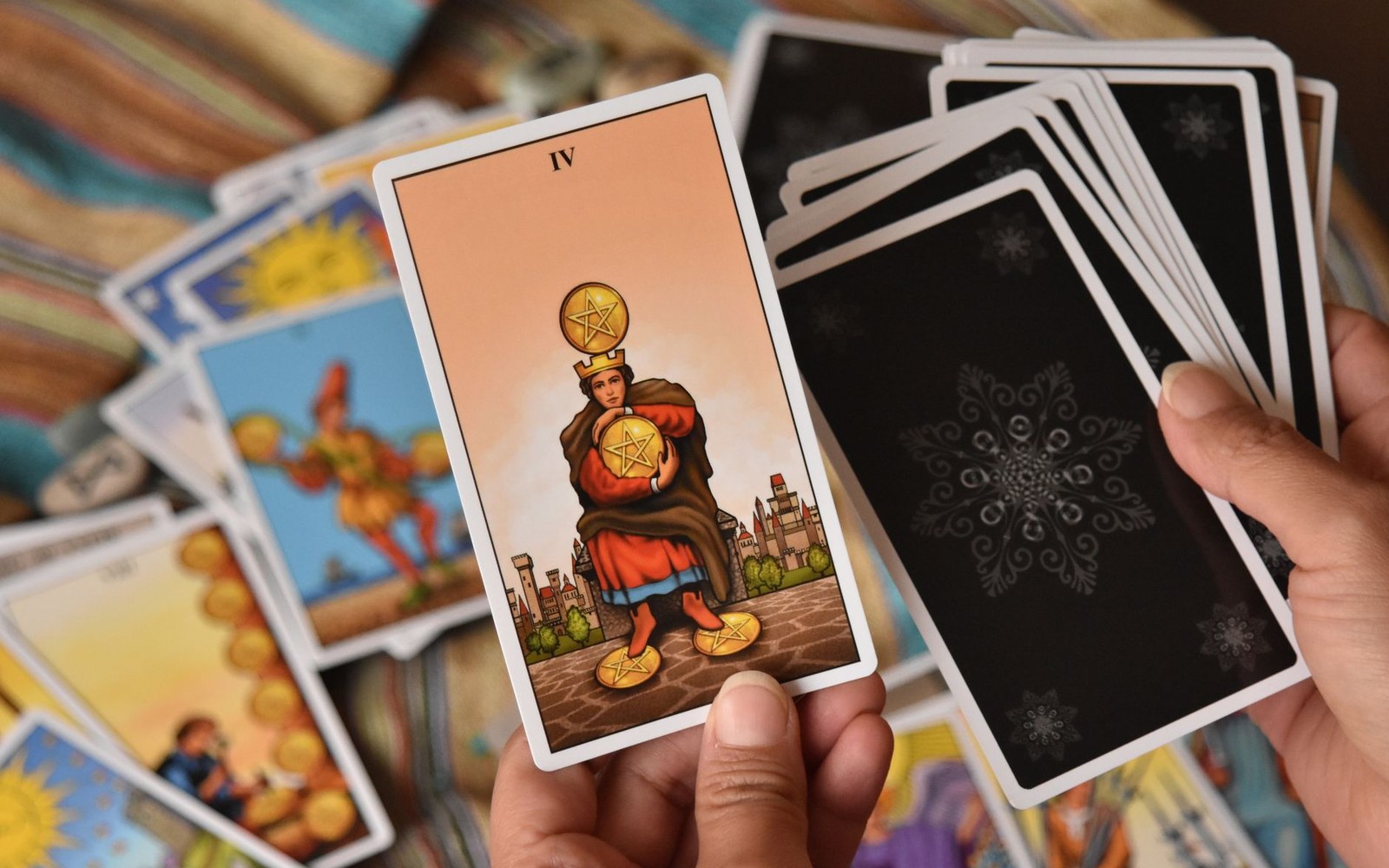
Dalí’s trumps quote the 1909 compositions closely enough to be read directly against them.
Photo: DΛVΞ GΛRCIΛ / Pexels
The Commission and the Object
The Universal Tarot — also issued as the Salvador Dalí Tarot — was published in 1984 by AG Müller of Schaffhausen, Switzerland, with distribution through U.S. Games Systems in North America. Dalí was eighty at the time of the commission and worked in collaboration with a studio; the degree of his personal involvement in individual cards is a matter of documented dispute rather than settled record. The deck runs to the standard seventy-eight cards, and the major arcana account for the imagery that attracted the most critical attention.
The Cards Against Their Sources
Dalí's treatment of the major arcana works primarily as collage — photographic and painted fragments assembled against washed grounds, with Dalí's own face appearing on several cards including The Magician, where his waxed moustache functions as an explicit signature. The Rider-Waite-Smith deck, whose minor arcana illustrations Pamela Colman Smith had completed in 1909, is the structural template: card numbering, figure positions and compositional axes follow the RWS tradition closely enough that individual cards read as transformations rather than reinventions. The Tower retains its lightning-struck architecture but replaces the falling figures with Dalínian bodies rendered in the elongated, melting style of his earlier paintings. The Star sets a female figure against a Catalonian coastal landscape that recurs across Dalí's broader body of work.
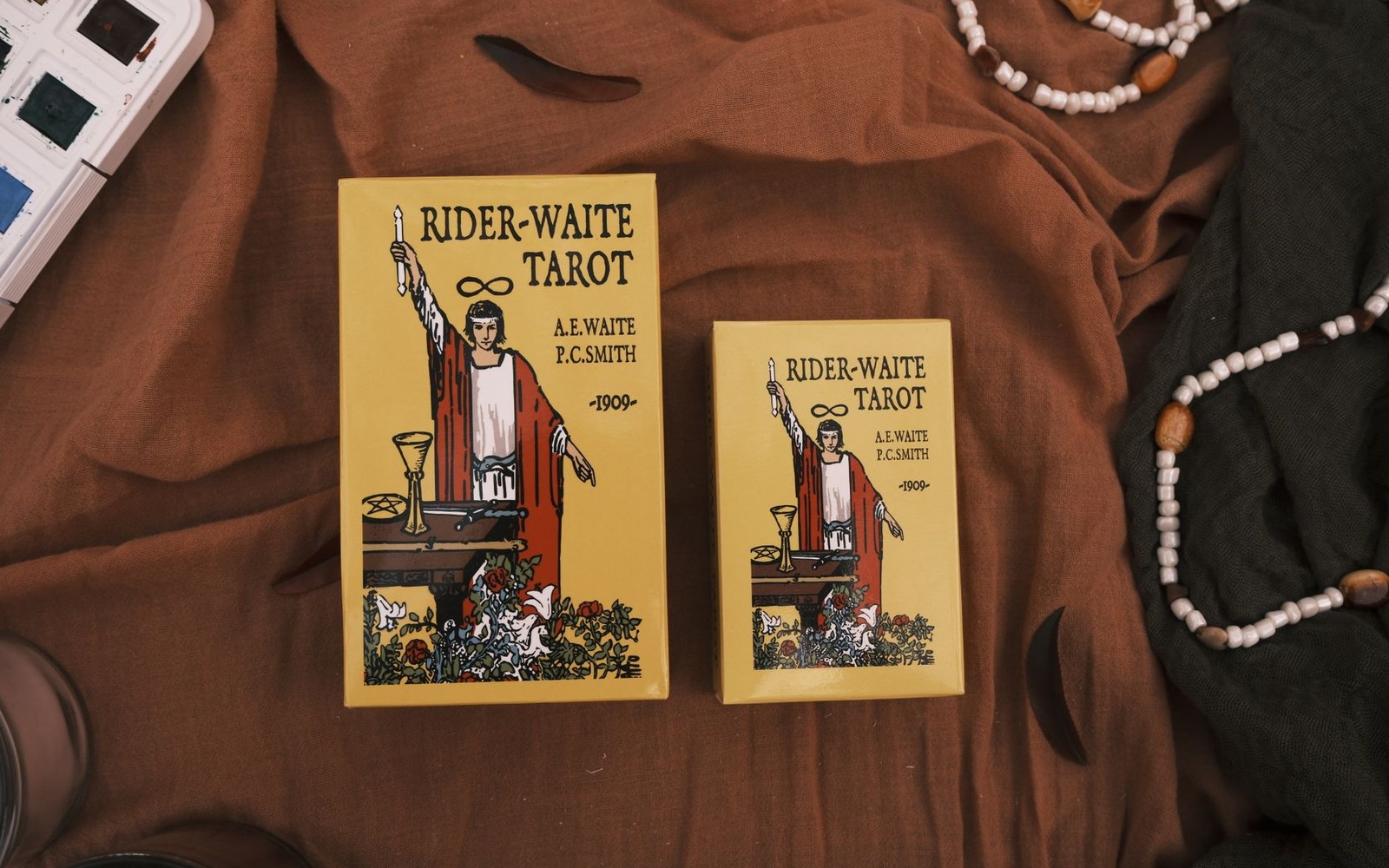
An early Rider printing. The illustrator’s name is not on the box.
Photo: dilara irem / Pexels

Retail is what sets the ceiling on unit cost.
Photo: cottonbro studio / Pexels
The pip cards, too, are fully illustrated, keeping the scenic minor arcana that define the RWS innovation rather than reverting to plain suit-marks. The major arcana bear his characteristic Surrealist vocabulary — dislocated anatomy, classical architectural reference, deliberate uncanny — while the minors lean more heavily on collaged fragments of earlier paintings. The result is a deck of two visual registers, expensively produced and widely documented in museum collections, in which the twenty-two trumps carry most of the invention and the fifty-six minors read as quieter variations on the same method.