Pl. 03THE DRAWING
The Sola Busca Went on Show in London in 1907
The earliest fully illustrated seventy-eight-card deck reached a London exhibition two years before Pamela Colman Smith began drawing for Waite — and the comparison with her pip cards has been debated ever since.
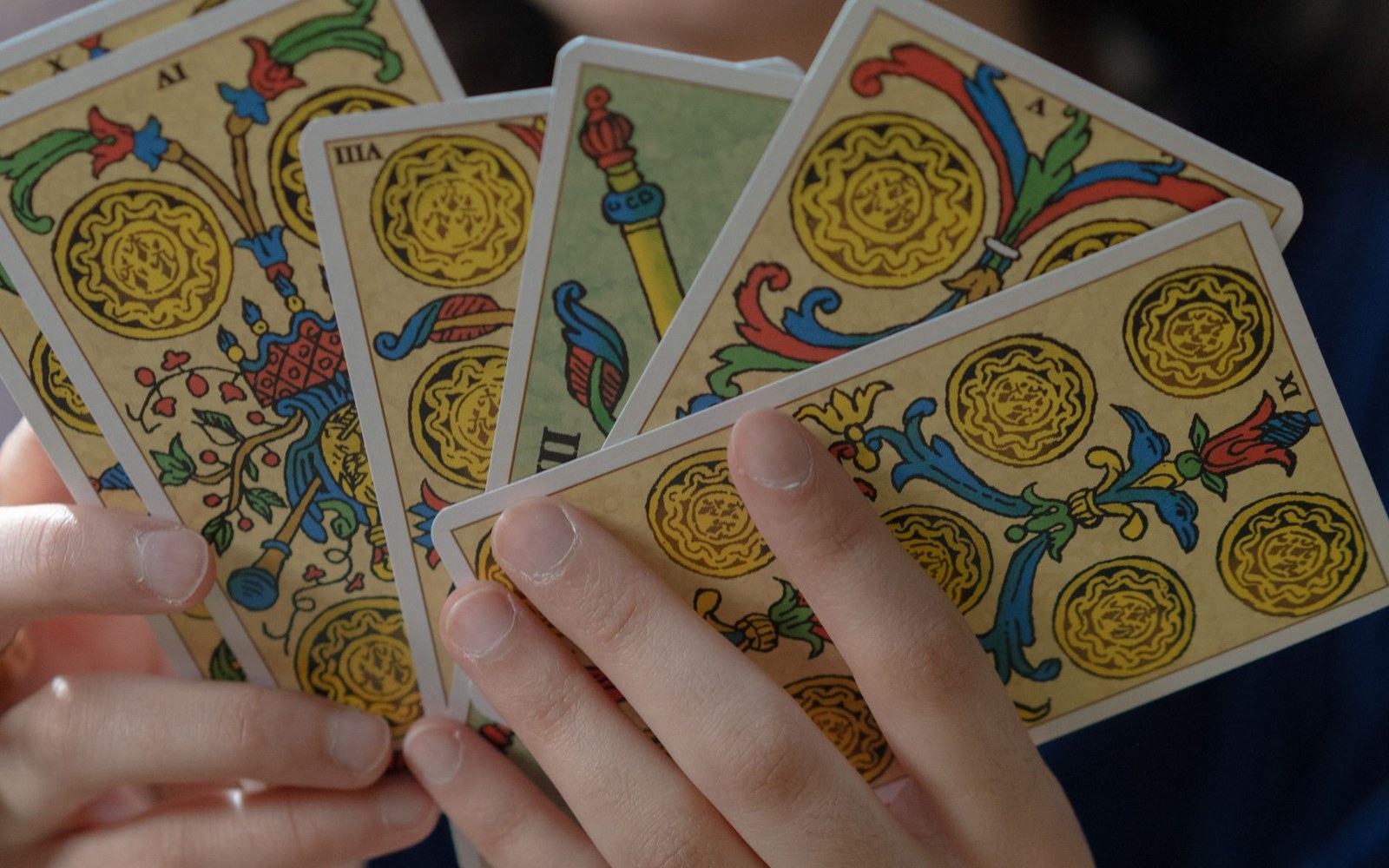
The 1491 pack’s numbered cards carry figures, which is the innovation the 1909 minors are usually credited with.
Photo: cottonbro studio / Pexels
A Complete Deck, Four Centuries Early
The Sola Busca tarocchi is an engraved pack, hand-coloured, produced in northern Italy in 1491. It is the earliest known complete seventy-eight-card deck in which every card — major arcana and minor arcana alike — carries a figural scene. Every one of the fifty-six pip cards shows a human figure or a narrative arrangement, not merely the repeated suit symbol that characterised virtually every other deck of the period. That distinction matters enormously: before 1909, the pip cards of mainstream tarot packs were geometric arrangements, showing swords or cups counted out across the card face with no human presence whatsoever.
The pack takes its name from the Milanese noble family that held it for centuries before it was acquired by the Italian state in 2009 for the Pinacoteca di Brera in Milan, where the cards now reside. The subjects across its pip cards are drawn from Roman history and myth — commanders, soldiers, priests, figures in armour — arranged with an urgency and specificity that distinguishes them from decorative fancy.
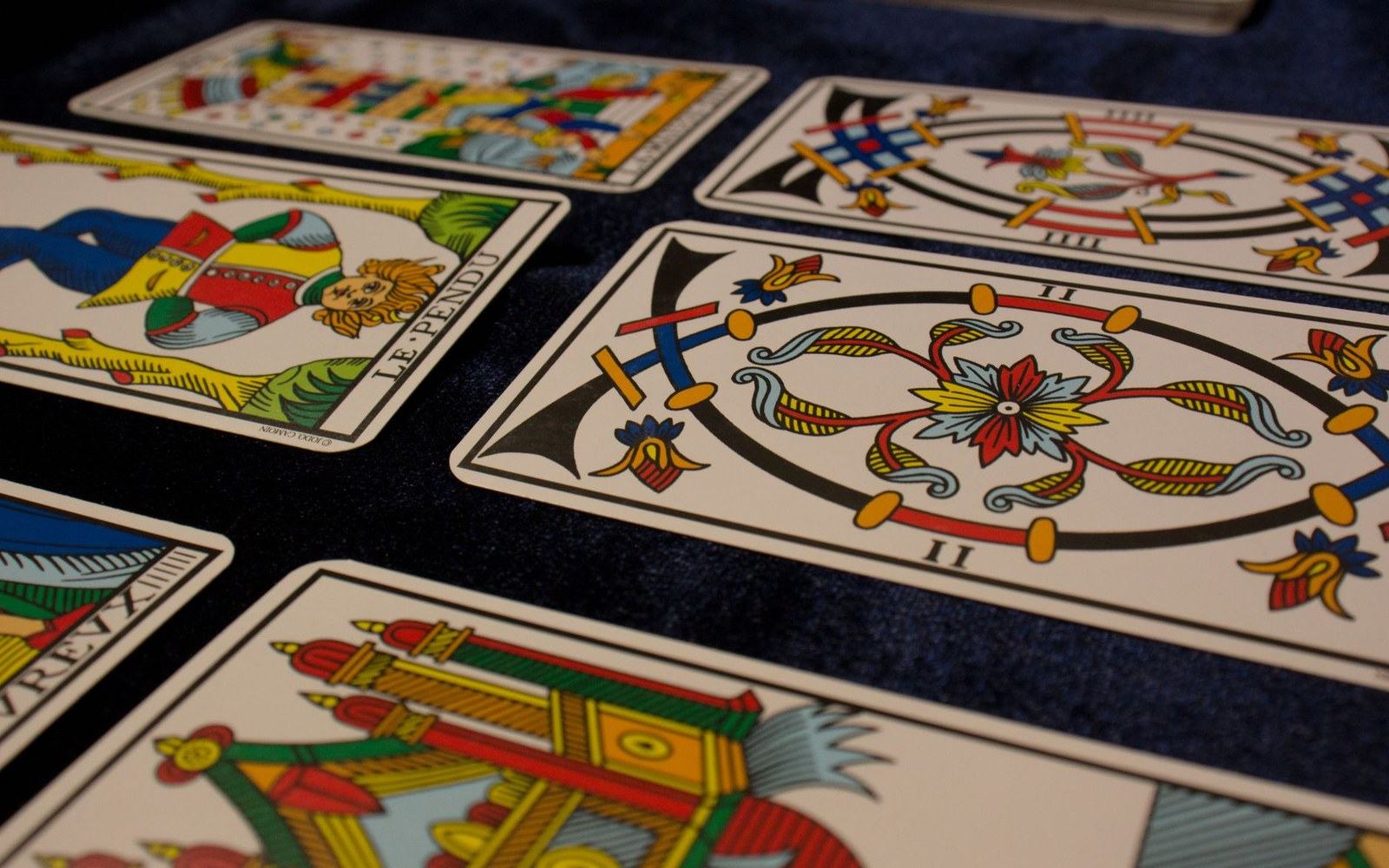
Before 1909 a numbered suit card looked like this: the symbol, repeated, arranged.
Photo: Pedro Rey / Pexels
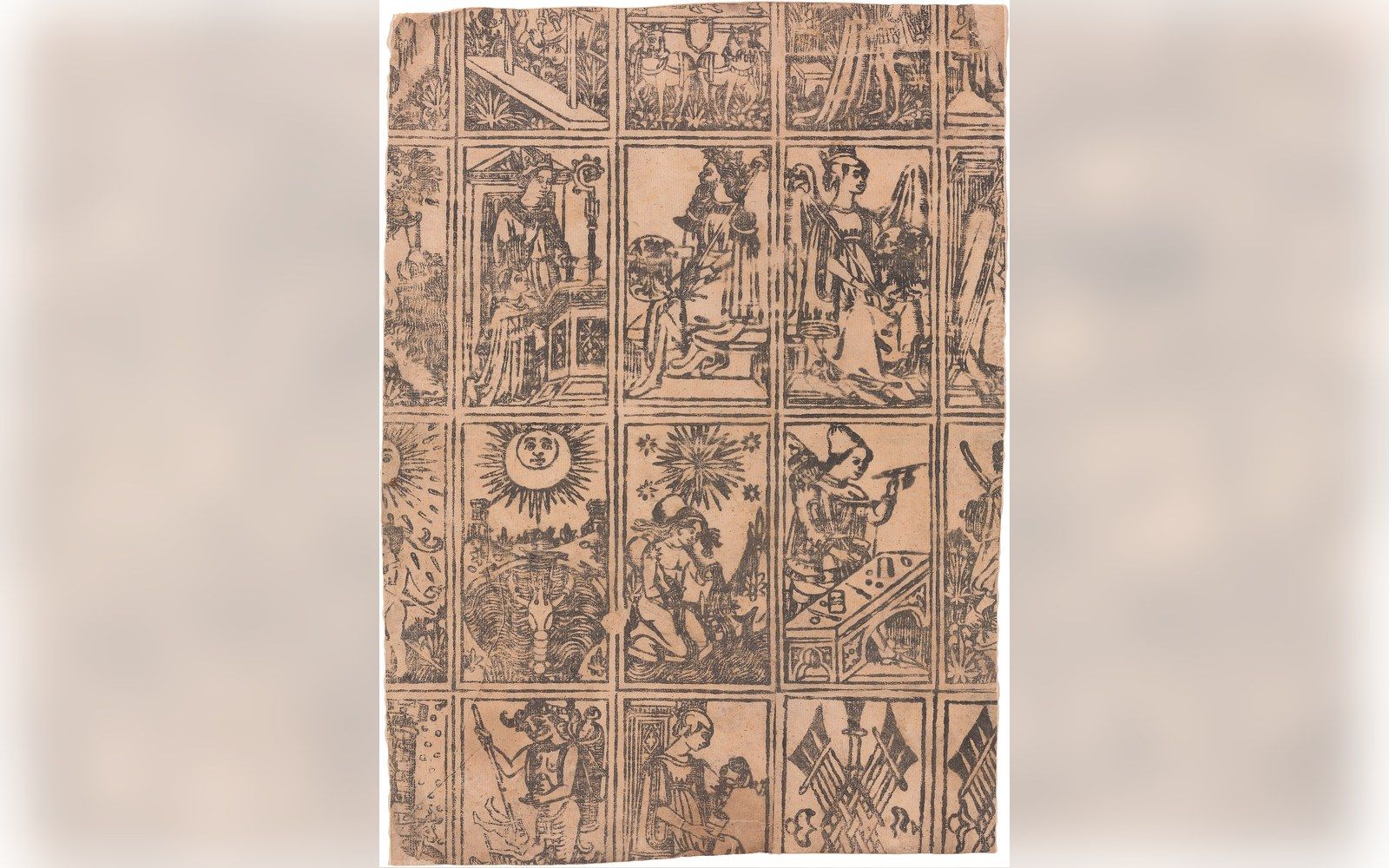
An uncut Italian sheet, c.1500. The collection’s strength is production, not play.
Photo: Beinecke Library, Yale University · Wikimedia Commons
London, 1907, and the Photographs
In 1907 the British Museum mounted an exhibition of playing cards that included photographic reproductions of the Sola Busca pack. The British Museum's playing-card collection is one of the most systematically catalogued in the world, and the exhibition made the imagery accessible to London's artistic public in a way that the original cards — held in a private collection across the previous centuries — had never been.
Pamela Colman Smith was in London in 1907. Her movements are documented through exhibition records and correspondence: she was exhibiting her own artwork, was active in the circle around Arthur Edward Waite and the Hermetic Order of the Golden Dawn, and was operating in precisely the cultural milieu that would have brought her to the British Museum's rooms. The commission from Waite that produced the Rider-Waite-Smith deck came in 1909, meaning the Sola Busca photographs were available to her during the two years immediately before she began drawing.
The case for influence rests on visual comparison rather than on any surviving written account from Smith herself. Scholars examining the pip cards she produced have noted specific correspondences: the figure on the Three of Swords, the posture of the figure on the Five of Pentacles, the arrangement on the Ten of Wands — each finds a plausible precedent in a Sola Busca pip card. The original cards are now held by the Pinacoteca di Brera, and high-resolution comparative study has only strengthened the case made by earlier researchers including the tarot historian Michael Dummett.
What the Comparison Establishes
The significance is not simply art-historical. If Smith drew on the Sola Busca imagery — even loosely, even by absorption rather than direct copy — then the decision to illustrate every pip card, which transformed tarot publishing in the twentieth century, had a documented precedent she would have seen. The innovation was not invented from nothing; it was recovered from a four-century-old model, and the recovery happened through the specific mechanism of a museum photographic display.
That chain — engraver to copperplate to photographic reproduction to exhibition to working artist — is a print-history story as much as an art one. The Sola Busca's imagery survived not in the original cards alone but in the reproducible photographs the British Museum circulated, and it is through that act of reproduction that it may have entered Smith's hand. Whether she stood in front of those photographs with a commission already forming or encountered them simply as an artist curious about an unusual historical object, the record cannot say. What the record does show is that the imagery was there, in London, two years before she picked up the pen.