Pl. 02GLOSSARY
How Seventy-Eight Became the Number
The 78-card structure feels axiomatic today. It was not always so, and not everyone has accepted it.
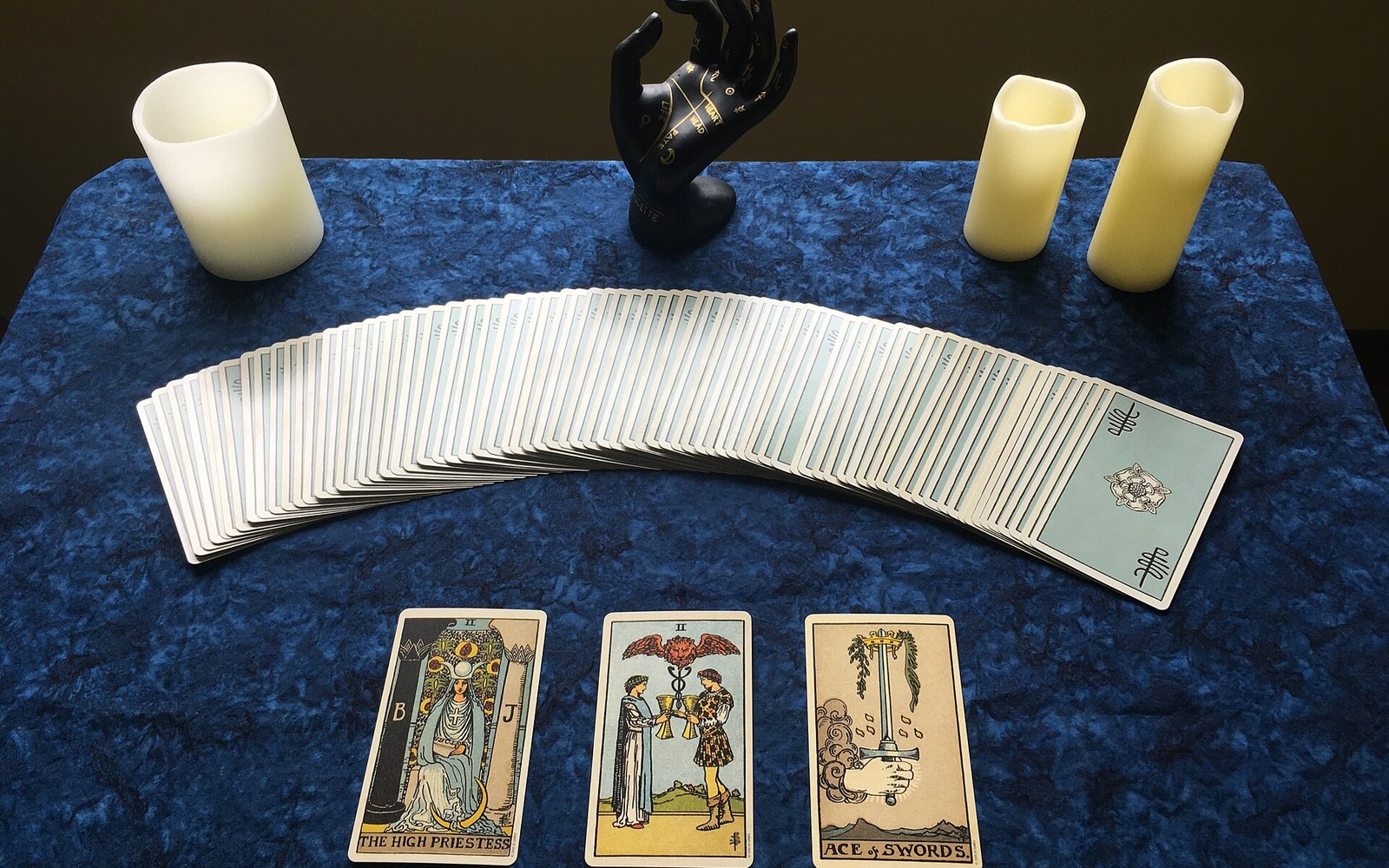
Twenty-two plus fifty-six: a count that hardened into a standard.
Photo: Tarot cards - 3 card spread with candles · Wikimedia Commons
From Variable to Standard
Early Italian tarocchi packs were not uniform. The Milanese tradition settled on 78 cards — twenty-two trumps and fifty-six suited cards across four ranks — but other regional patterns diverged sharply. The Minchiate, a Florentine variant documented from the sixteenth century, expanded the trump sequence to forty-one, producing a 97-card pack. Bolognese tarocchino contracted instead, dropping the pip cards numbered two through five from each suit to produce a 62-card game. Neither count struck contemporaries as irregular: the number followed the game, not some prior ideal.
The Marseille pattern — the woodblock tradition that dominated French and Central European production from the seventeenth century onward — settled on 78 and exported that count with its imagery. When Nicolas Conver cut his blocks around 1760, he cut seventy-eight of them, and printers replicating the pattern replicated the structure alongside it. Manufacture, as much as doctrine, stabilised the count.
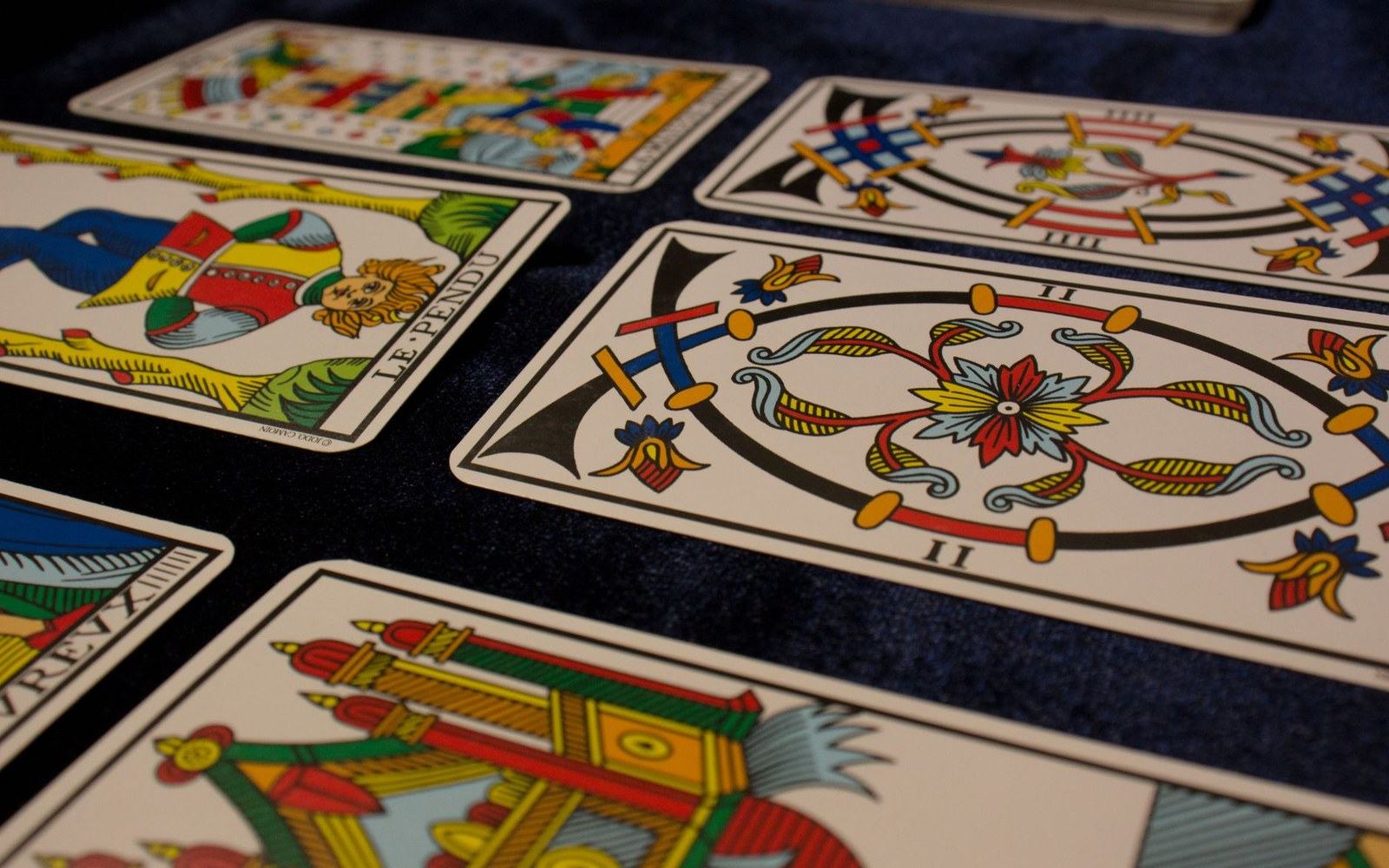
Before 1909 a numbered suit card looked like this: the symbol, repeated, arranged.
Photo: Pedro Rey / Pexels
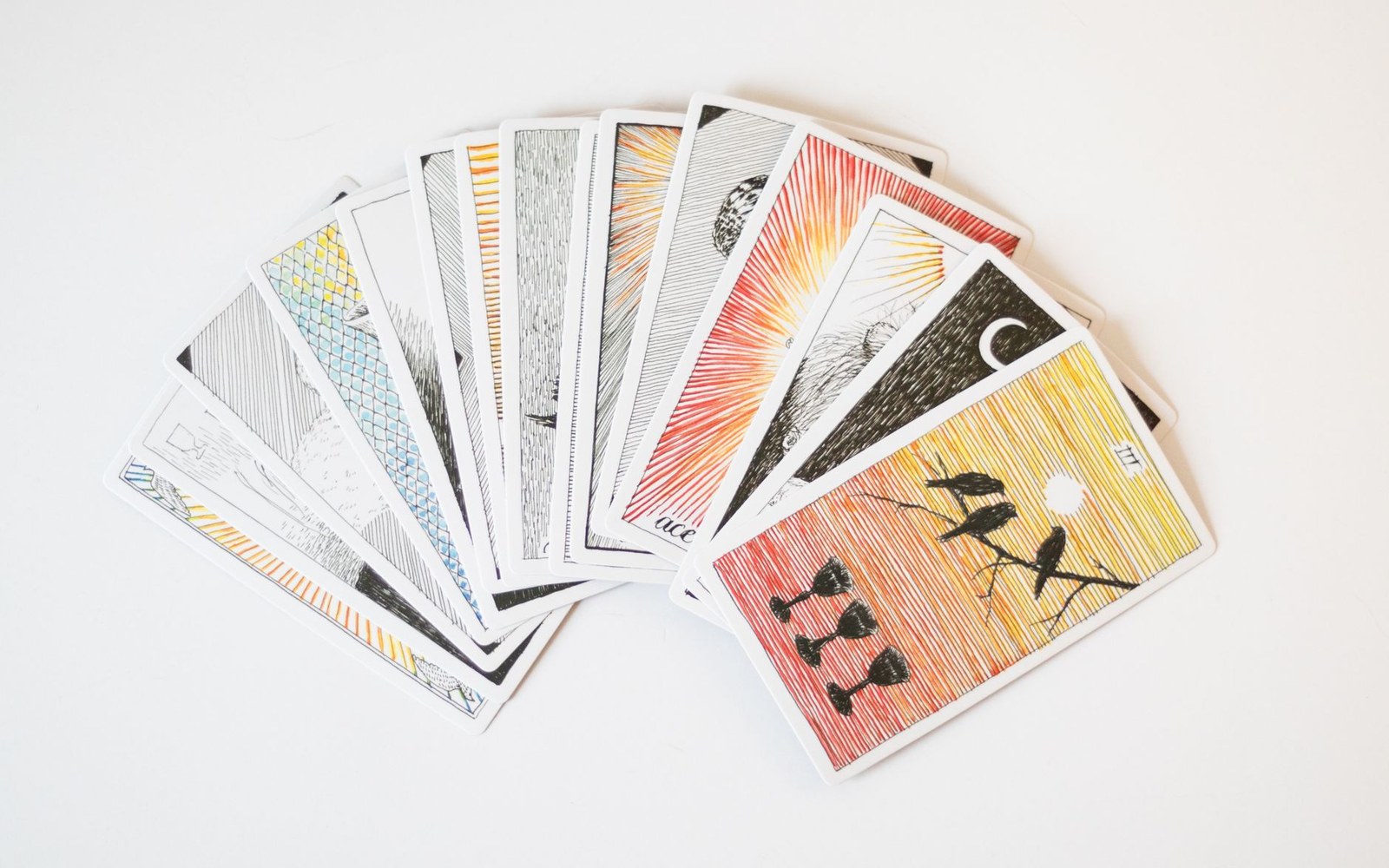
Finishes sell a crowdfunded deck: edge colour, foil, box and stock are all committed before a single unit exists.
Photo: Fiona Murray / Pexels
The number received its first pseudo-mystical rationale in 1781, when Antoine Court de Gébelin, in volume eight of Le Monde Primitif, declared the cards an ancient Egyptian inheritance. He was working from a Marseille pack and counting what it contained. Seventy-eight was thus inscribed into the occult tradition by accident of which deck was on the table, not by calculation.
The Hermetic Order of the Golden Dawn then built its correspondence system — connecting the twenty-two major arcana to the twenty-two letters of the Hebrew alphabet and the fifty-six minor arcana to the remaining structural positions — on the same 78-card chassis. When Arthur Edward Waite and Pamela Colman Smith produced their deck for William Rider and Son in 1909, they inherited the count without question. U.S. Games Systems, which has published the Rider-Waite-Smith continuously since acquiring rights in 1971, has kept every reprint at seventy-eight cards.
Who Has Broken the Count
Deliberate departures exist. Aleister Crowley's Thoth deck, painted by Lady Frieda Harris between 1938 and 1943 and first published in full in 1969, carries seventy-eight cards but renames several of the majors (Adjustment, Lust and Art replace Justice, Strength and Temperance) — the number holds while the contents shift. Some Kickstarter-funded independent decks have issued eighty or more cards by adding extra majors or a fifth suit. Lo Scarabeo has published oracle decks under tarot-adjacent branding with non-standard counts, keeping the distinction between oracle and tarot deliberately blurred in marketing.
What no publisher has managed is to replace 78 as the default expectation. Cartamundi's contract manufacturing, Llewellyn Worldwide's catalogue, and the bulk printing operations centred in Guangdong all treat seventy-eight as the baseline from which deviation requires justification. The number is now a trade standard as much as a tradition.