Pl. 01COLLECTIONS
Seventy-Four Cards in Three Cities
The most studied tarot pack in existence survives incomplete, divided across two institutions and a private collection — and the gaps are as revealing as the cards themselves.
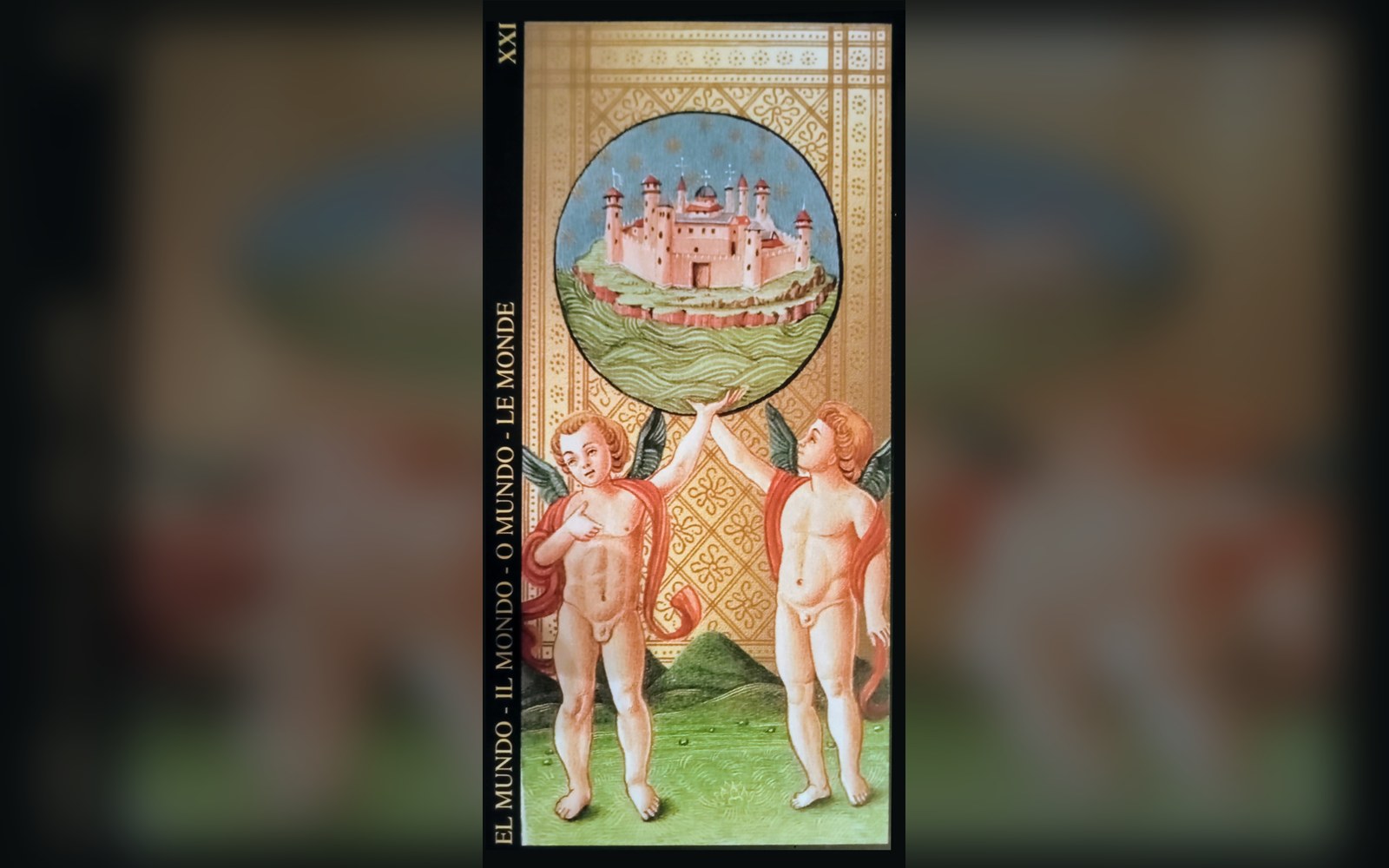
Trump XXI, from the largest surviving portion of the pack.
Photo: Arcana N°21 card in Visconti Sforza tarot deck (scan 2025) · Wikimedia Commons
What Survives, and Where
The Visconti-Sforza pack was painted in Milan around the mid-fifteenth century, most likely in the 1450s, probably for Francesco Sforza or a member of the Visconti-Sforza court. It is the earliest substantially complete tarot pack known, and its survival is a story of dispersal rather than custody. Of the seventy-eight cards a complete pack would be expected to hold, seventy-four are documented. The remaining four — the Devil, the Tower, the Knight of Coins, and the Three of Swords — have not been located in any public or private collection. Whether they were lost, destroyed, or simply separated and unidentified remains an open question.
The largest holding sits at the Morgan Library and Museum in New York, which owns thirty-five cards. The Morgan acquired its portion through Pierpont Morgan's purchase of the Visconti di Modrone collection material in the early twentieth century — part of the systematic buying that built one of the great manuscript and early printed collections in the United States. The Bergamo holding, kept at the Accademia Carrara, accounts for twenty-six cards and has been in public institutional hands since the nineteenth century. The remaining thirteen cards are held by the Colleoni family, a private Italian holding with documented descent from earlier aristocratic ownership. The three-way split is not the result of any single event but of sales, gifts, and inheritance decisions spread across several centuries.
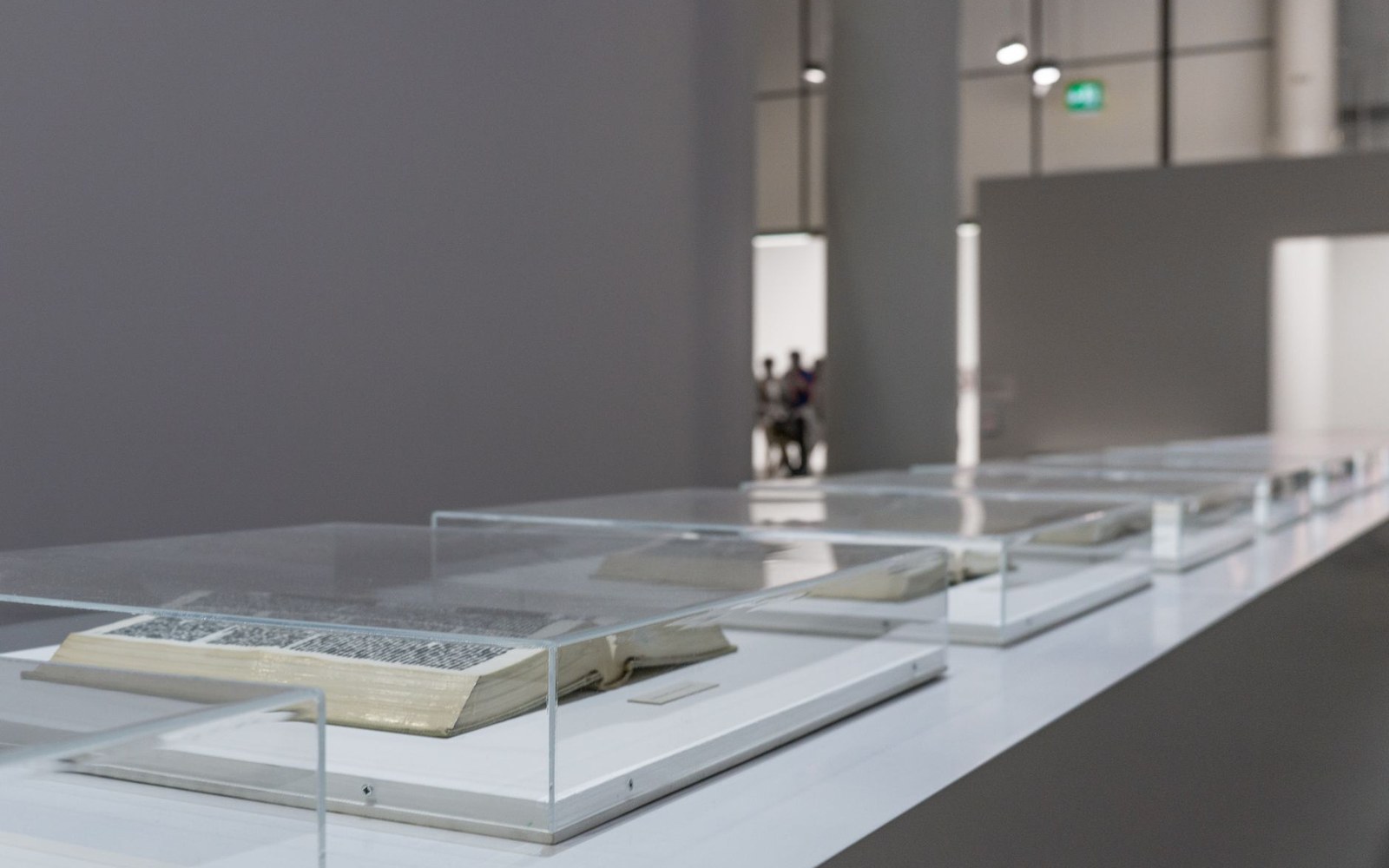
Conservation terms, not display terms: low light, flat mounts, no handling.
Photo: mali maeder / Pexels
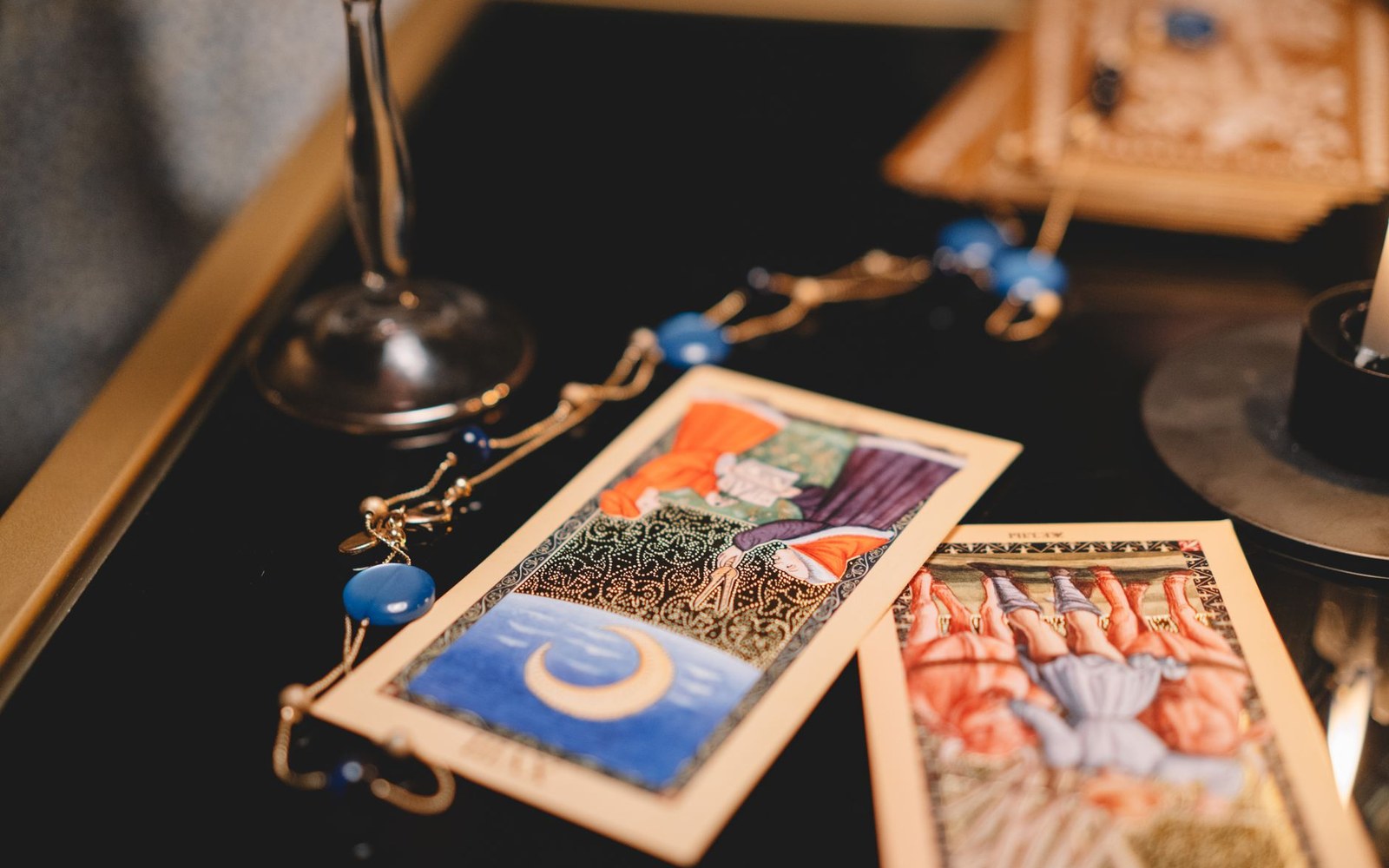
Gold ground, punched and tooled: these cards were made for a court, not a card table.
Photo: cottonbro studio / Pexels
What the Division Reveals
Reading the pack as a unit requires working from photographs and facsimiles, since the three holdings have rarely if ever been physically reunited. The Morgan cards have been digitised and are accessible through the library's online catalogue, which makes comparison possible, but the physical evidence — card thickness, gilding technique, the precise pigments used — can only be fully examined institution by institution.
The cards themselves are painted on layered card stock with applied gold leaf on many of the major arcana (the twenty-two named trump cards numbered 0 through 21) and court cards — the page, knight, queen, and king positions in each suit. The gold is punched and tooled in patterns that vary slightly across the deck, a detail that has led some art historians to suggest more than one illuminator worked on the commission, though the question is not settled. The figures on the major arcana are painted at a scale and with a finish quality distinct from the pip cards — the numbered suit cards — where decorative repetition replaces portraiture.
The four missing cards are conspicuous not only for their absence but for their subject matter. The Devil and the Tower are precisely the cards most associated with themes that a fifteenth-century Milanese patron might have chosen to omit or that a later owner might have removed for moral or religious reasons. This is inference, not record. The documentary evidence for why those four specific cards are gone simply does not exist.
Facsimiles and the Problem of Completeness
The pack has been reproduced in facsimile editions multiple times. U.S. Games Systems issued a version with reconstructed replacements for the missing cards, drawn by a twentieth-century hand in approximate period style — a practical publishing decision that nevertheless changes what a reader handles. Facsimile publishers face a choice the original patron never anticipated: whether to present a pack of seventy-four cards as it is, or to complete it to seventy-eight by artistic interpolation. The Morgan Library's digitised record does not interpolate; it shows what is held.
The split custody has one incidental benefit: it distributes the risk. A fire, flood, or institutional failure that destroyed one holding would not take all seventy-four surviving cards. The Visconti-Sforza has outlasted the dynasty that commissioned it, the city-state that housed it, and several centuries of European upheaval — scattered, not intact, but largely present. That is more than can be said for most painted objects of its age.