Pl. 05THE MYTHOLOGY
Calvino Used a Tarot Pack to Build a Novel
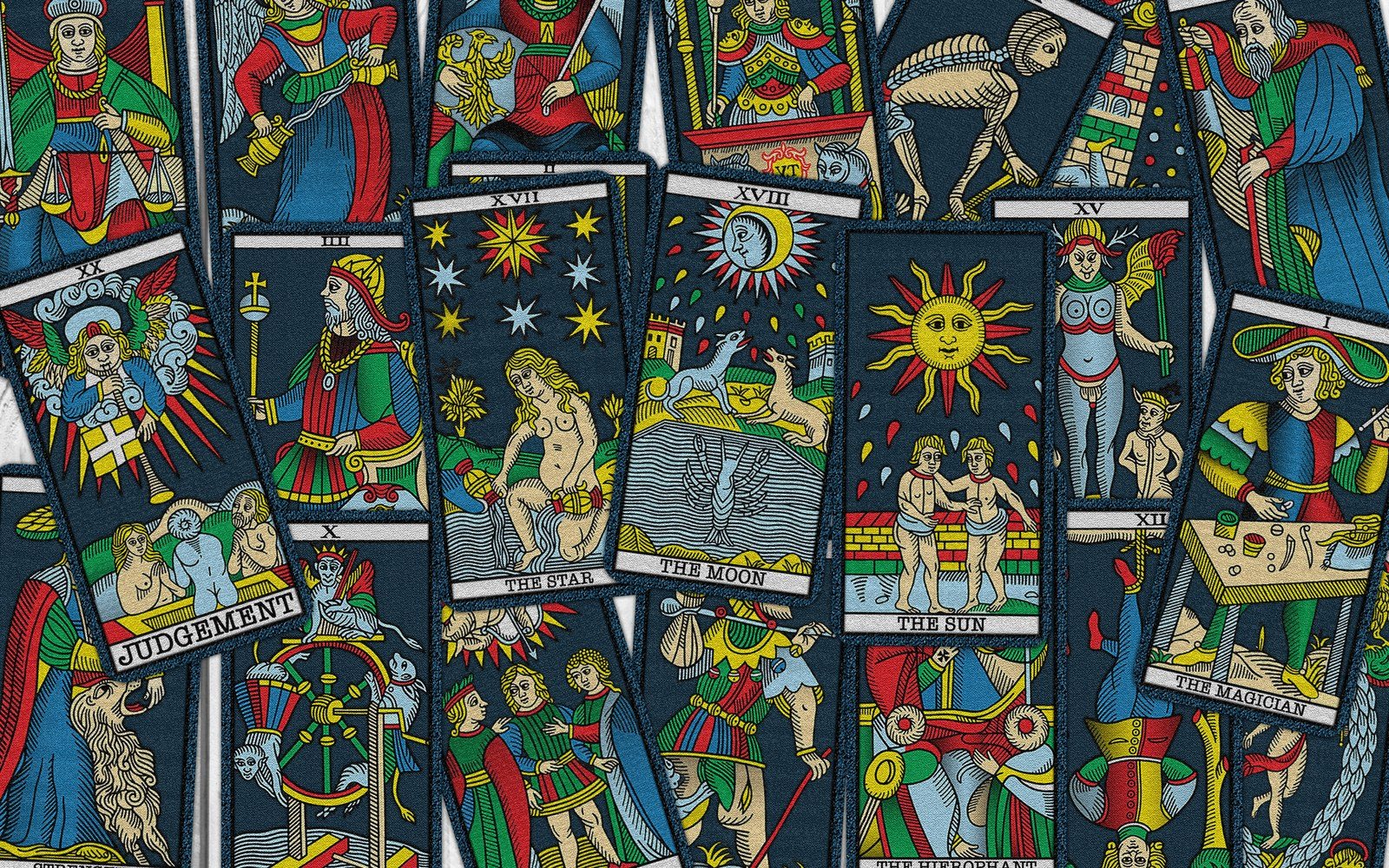
Calvino dealt the Visconti-Sforza images out as a grid and read the rows as sentences.
Photo: michael lim / Pexels
In 1969, Italo Calvino set a group of mute travellers around a table and let the Visconti-Sforza pack tell all their stories at once.
The Machine and Its Cards
The Castle of Crossed Destinies began as a short piece commissioned for a 1969 volume on the Visconti-Sforza pack, the mid-fifteenth-century Milanese deck painted for the ruling dynasties of Lombardy. Calvino expanded it into a novel, published in full by Einaudi in 1973. The premise is structural rather than mystical: travellers arriving at a castle find themselves unable to speak and begin laying cards on the table to narrate their experiences. Each sequence of images becomes a story; the sequences cross and share cards; the same card, read in different directions by different hands, carries different meanings for different narrators.
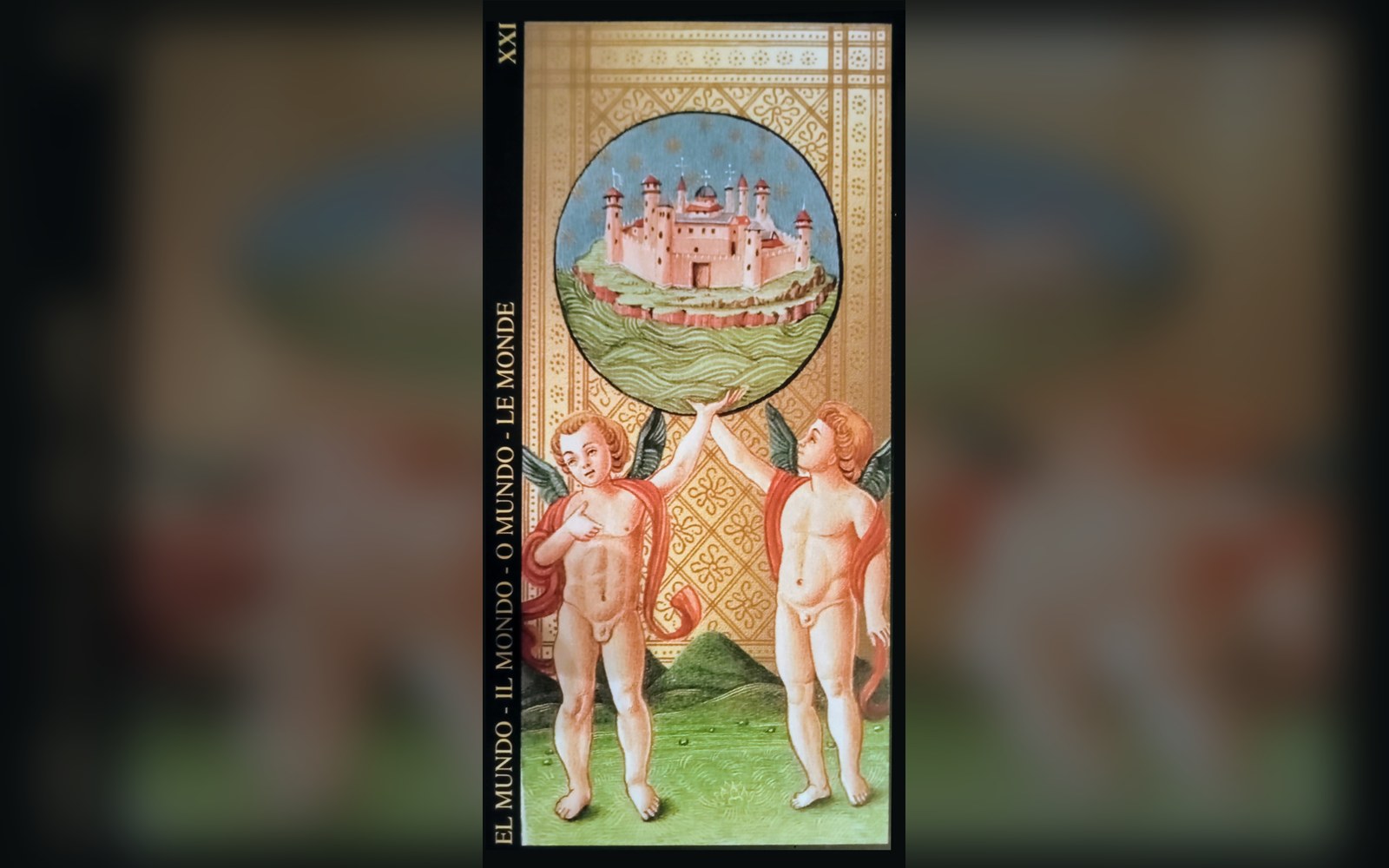
Trump XXI, from the largest surviving portion of the pack.
Photo: Arcana N°21 card in Visconti Sforza tarot deck (scan 2025) · Wikimedia Commons
Conservation terms, not display terms: low light, flat mounts, no handling.
Photo: mali maeder / Pexels
What attracted Calvino to the Visconti-Sforza specifically was the density of its figural imagery. These are painted cards, not pip cards with bare suit symbols — each one carries a scene, a figure, a symbolic arrangement rich enough to sustain interpretation without prescribing it. Calvino treated the imagery the way a filmmaker treats found footage: as fixed visual material whose meaning shifts entirely with context and sequence. He was not reading the cards. He was editing them.
The novel's architecture is its argument. Stories run horizontally across the table; other stories run vertically through the same cards; the grid of the laid-out deck becomes both the story's setting and its medium. Calvino subsequently attempted a second version, built around a tarot of Marseille deck and set in a tavern — that fragment, published alongside the castle narrative in the same volume, uses the more schematic Marseille imagery to different effect, demonstrating how the visual character of a specific physical pack determines what a narrative built from it can do.
The book sits in a documented tradition of treating tarot as a combinatorial system — a grid of pictures that generates meaning through arrangement rather than fixed prescription. Calvino's contribution was to take that logic seriously as a literary device and to let the physical object, cards and all, remain visible inside the fiction as both tool and subject.