Pl. 04THE MYTHOLOGY
The Golden Dawn Taught a System, and the System Became the Deck
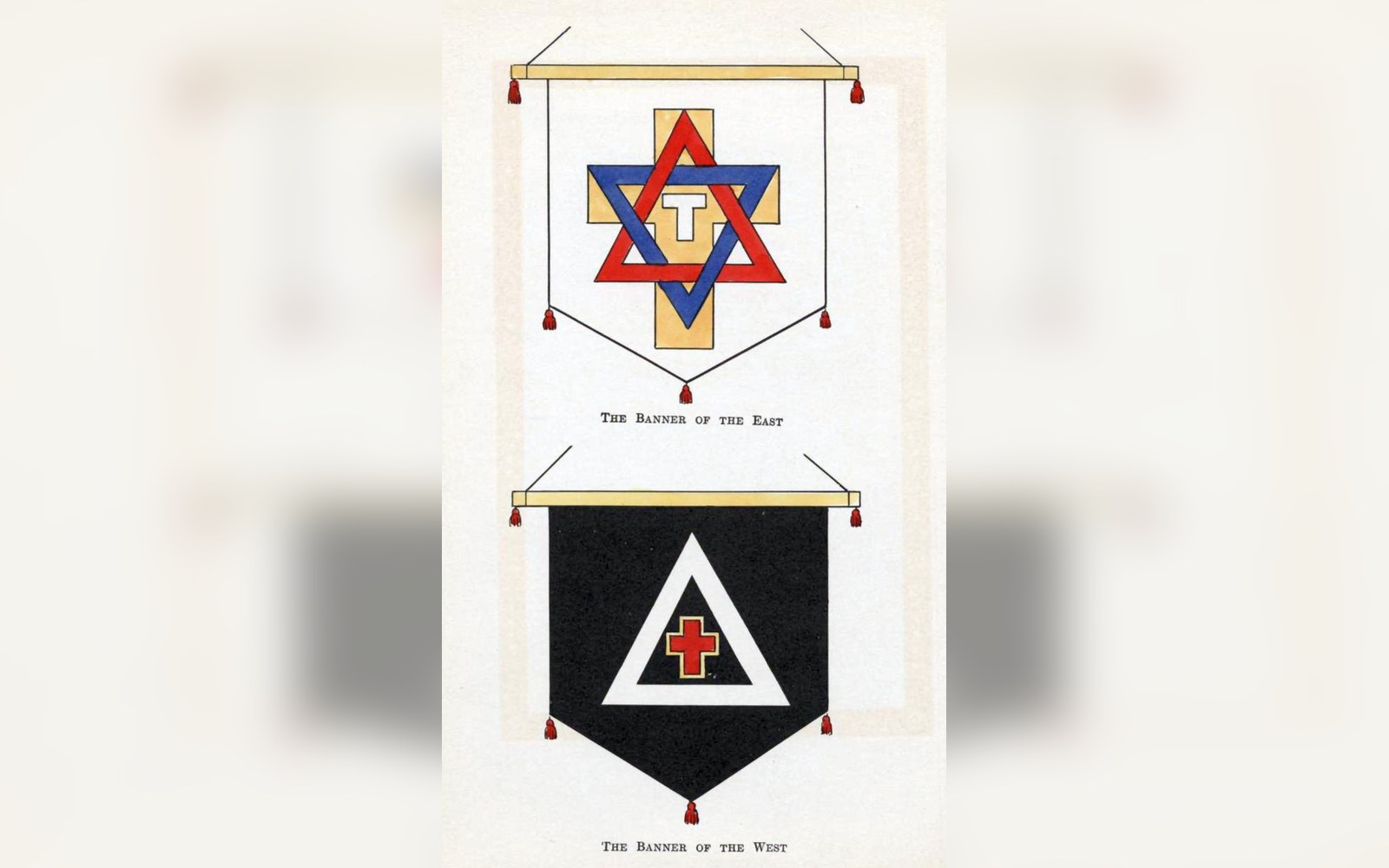
The Order taught the correspondences as grade material, with its own regalia and diagrams.
Photo: Wikimedia Commons
How a London occult order's formal curriculum shaped two of the twentieth century's most influential tarot commissions
The Curriculum Behind the Cards
The Hermetic Order of the Golden Dawn, founded in London in 1888, was not primarily a tarot society. It was a graded initiatory fraternity whose syllabus covered Éliphas Lévi's correspondence between the Hebrew alphabet and the twenty-two major arcana, as well as astrology, Enochian magic, and Kabbalistic cosmology. Tarot entered that curriculum because Lévi had placed it there: his 1854 argument that the twenty-two trumps mapped onto the twenty-two letters of the Hebrew alphabet gave the cards a structural role in the Order's metaphysical architecture.
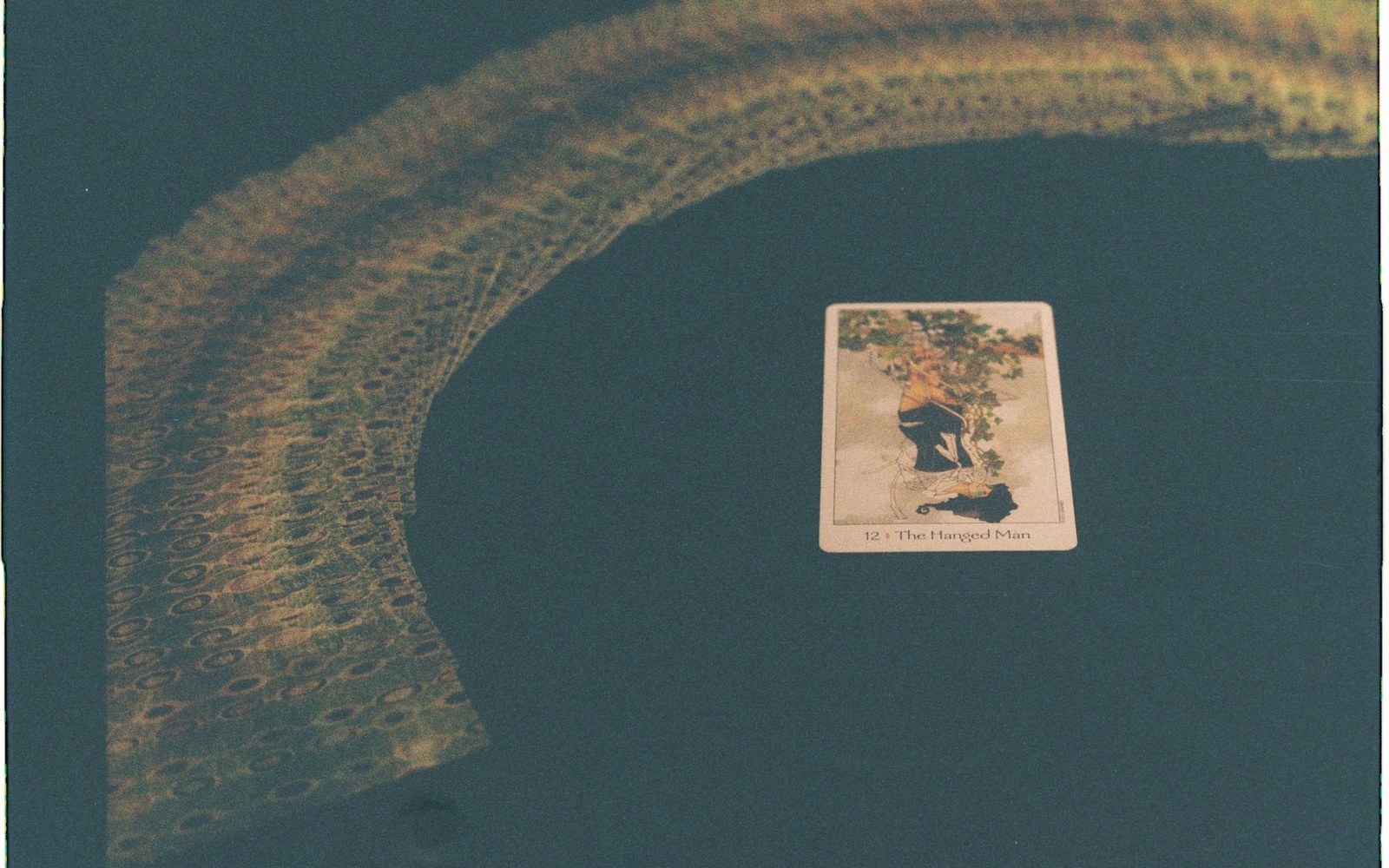
Harris worked in watercolour on board, well above printed card size.
Photo: Uyen Nguyen / Pexels
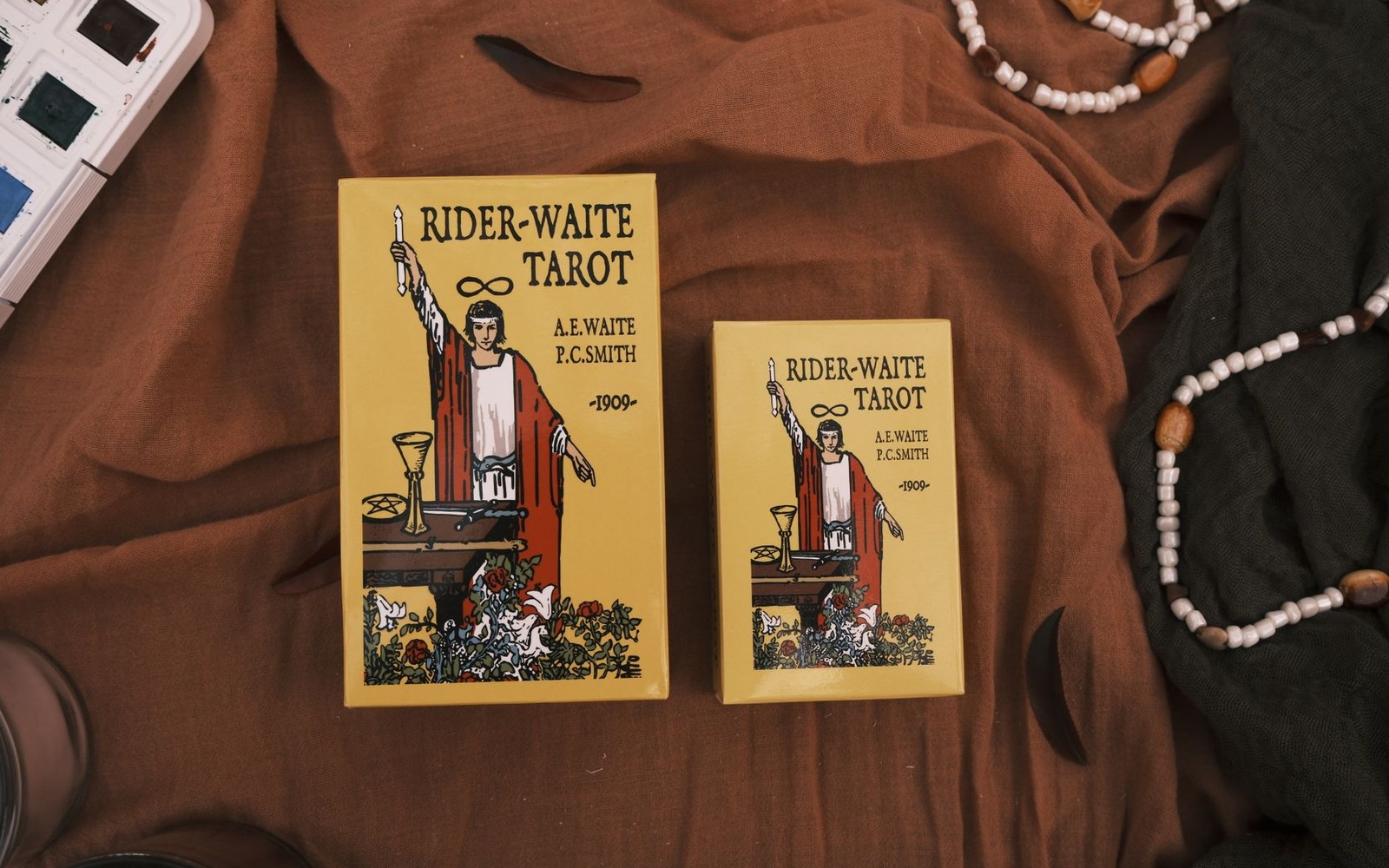
An early Rider printing. The illustrator’s name is not on the box.
Photo: dilara irem / Pexels
Both Arthur Edward Waite and Aleister Crowley were initiated into the Golden Dawn in the 1890s before leaving under different circumstances and in different directions. What they carried out was the same inherited framework: the Hebrew-letter attributions, the astrological correspondences assigned to individual cards, the elemental assignments governing the four suits. The framework was not published openly; it circulated in handwritten documents passed to initiates as they advanced through the Order's grades. When each man eventually commissioned a deck, he was externalising that closed curriculum as printed matter.
Waite's approach was conservative. He retained the correspondences but declined to print them on the cards themselves, treating the system as background knowledge that would inflect the images without being stated. The commission he gave Pamela Colman Smith, executed for William Rider and Son and published in 1909, produced a deck in which the imagery encodes the attributions visibly enough for a trained reader of the tradition — the figure on the Star card, for instance, relates to the Hebrew letter Tzaddi in the Order's system — while remaining legible as narrative illustration to anyone without that background.
Crowley was explicitly corrective. He believed the Golden Dawn had mis-assigned certain correspondences and his Thoth deck, painted by Lady Frieda Harris between 1938 and 1943, made those revisions visible on the card faces themselves, printing the Hebrew letters and astrological symbols directly. Where Waite concealed the machinery, Crowley annotated it.
The two decks are therefore not parallel responses to the same source but divergent editorial positions on it. The Hermetic Order of the Golden Dawn produced neither deck, and its formal structures dissolved well before either was published. What it left behind was a standardised notation for the cards — one coherent enough that two men who fundamentally disagreed on its details both found it the necessary starting point for any serious tarot commission.