Pl. 03THE MYTHOLOGY
Éliphas Lévi Tied the Cards to the Hebrew Alphabet in 1854
A French occultist's published correspondence between tarot trumps and Hebrew letters became the structural skeleton of every deck the Golden Dawn ever touched.

Lévi’s system is a table of correspondences before it is anything else.
Photo: Mihaïl Zablodsky / Pexels
The Argument and Its Sources
Alphonse Louis Constant, a failed Catholic seminarian who published under the pen name Éliphas Lévi, released the two volumes of Dogme et Rituel de la Haute Magie in 1854 and 1856. The book is not principally about tarot. It is a systematic attempt to unify Western esoteric traditions — Kabbalah, ceremonial magic, numerology — into a single coherent doctrine. The tarot correspondence arrives as one component of that larger architecture, but it proved to be the most durable piece.
Lévi's core claim was precise: the twenty-two major arcana, the named trump cards in a tarot pack, align exactly with the twenty-two letters of the Hebrew alphabet. The number was not a coincidence he had discovered but a structural argument he was constructing. He also mapped the trumps onto the ten sephiroth and twenty-two paths of the Kabbalistic tree of life, creating a three-way correspondence among cards, letters, and the cosmological diagram. The intellectual sources behind this were partly borrowed. Antoine Court de Gébelin had proclaimed in 1781 that the tarot was an ancient Egyptian wisdom text; Lévi inherited that prestige claim and gave it a more technically elaborate framework. He also drew on the Christian Kabbalah tradition that had circulated in European learned culture since the fifteenth century, and on the work of earlier French occultists who had begun mapping letters onto the trump sequence before him.
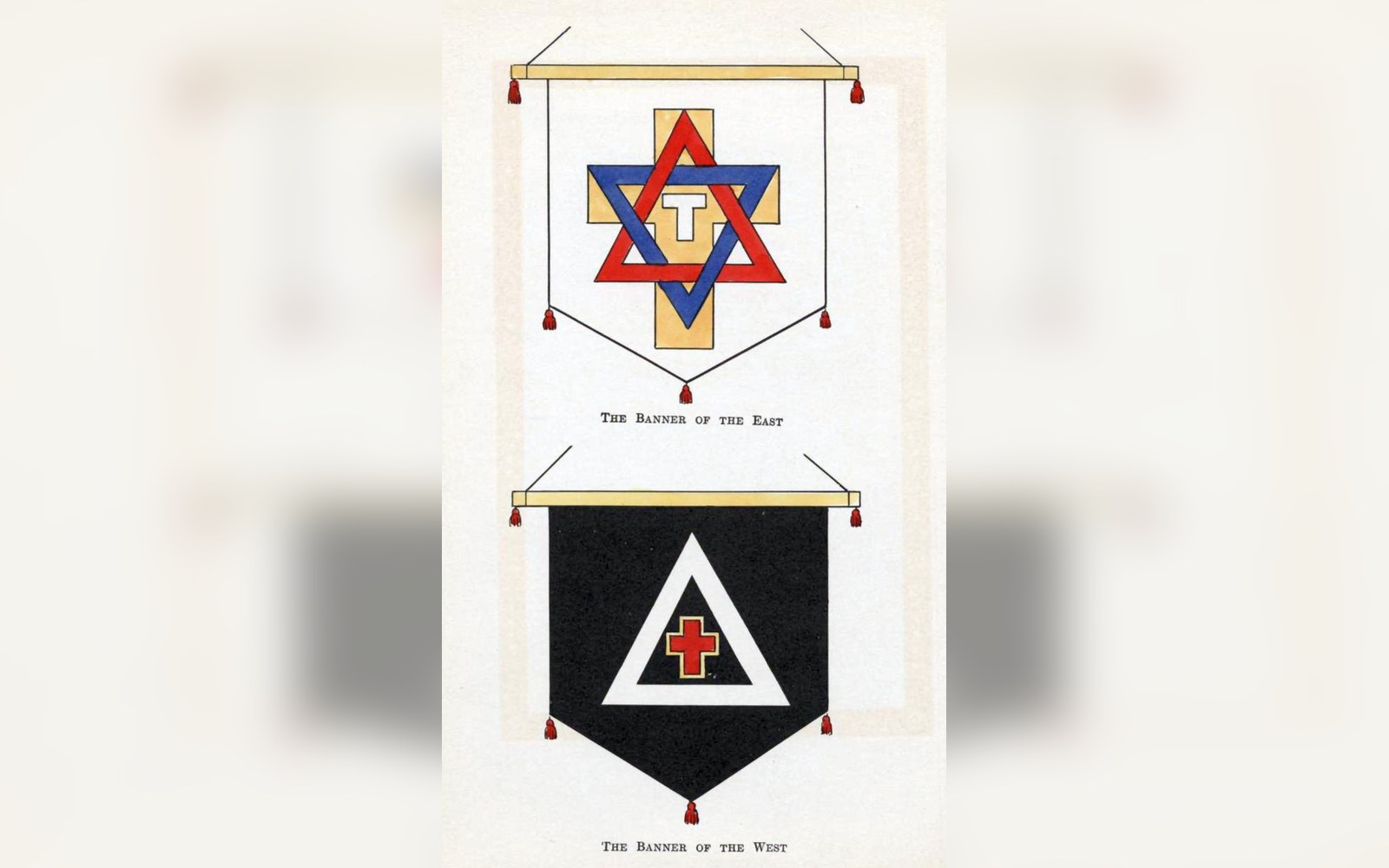
The Order taught the correspondences as grade material, with its own regalia and diagrams.
Photo: Israel-Regardie-Golden-Dawn-Vol-1-1937-Banner-Frontispiz · Wikimedia Commons
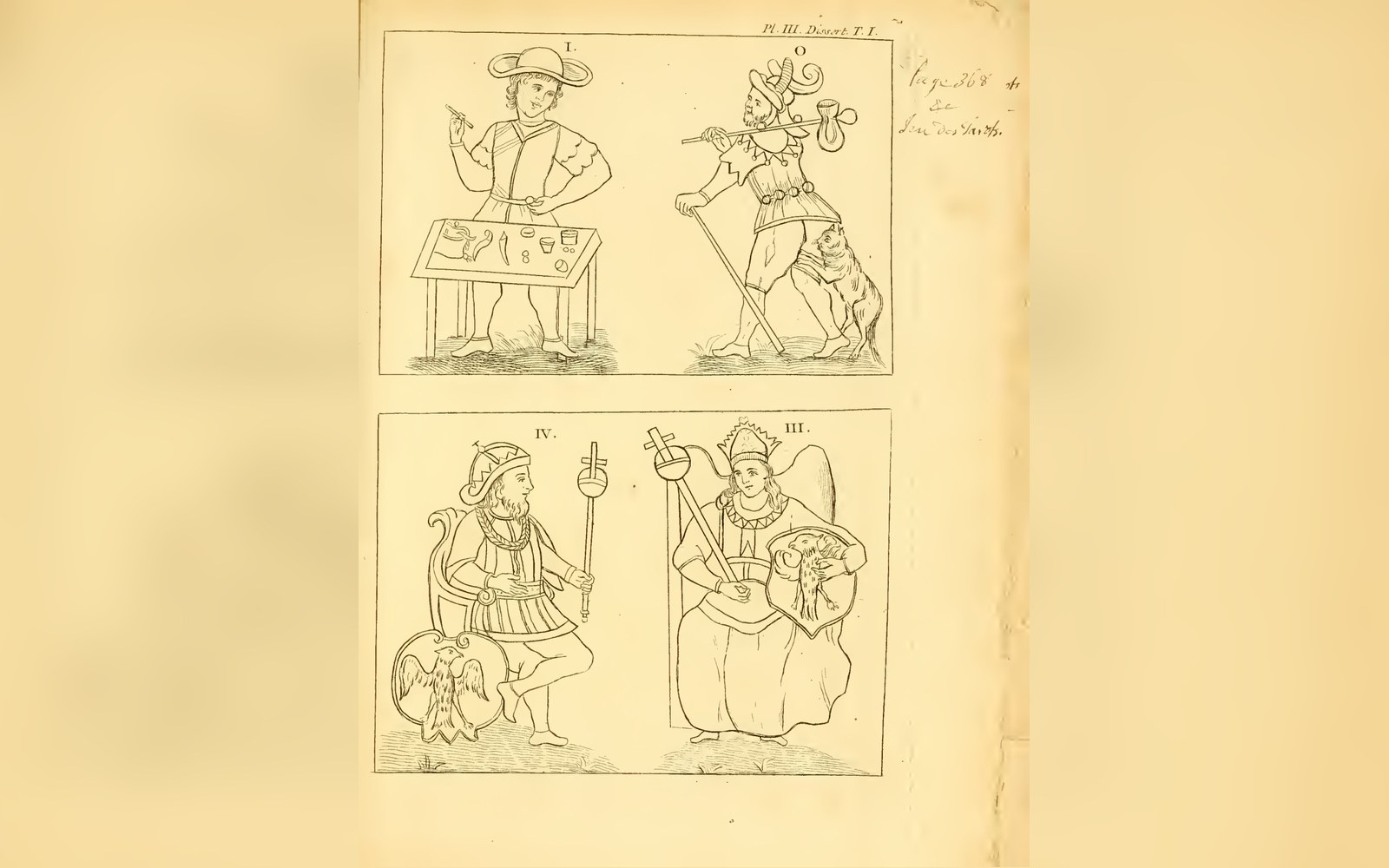
Plate III of the eighth volume: the Paris cards redrawn as evidence for a civilisation that was never there.
Photo: Court de Gébelin - Monde Primitif T. 8 Pl. 03 · Wikimedia Commons
What Lévi added was synthesis and confident publication. He printed the whole system in a commercially available book, stated the correspondences as established fact, and integrated them into a ritual practice that gave the framework practical application. That decisiveness mattered as much as the ideas themselves.
From Paris to the Golden Dawn
The path from Lévi's printed page to the English-speaking world ran through translation, travel, and institutional adoption. Lévi visited London in 1861 and made contacts in British occult circles. His books circulated in French among educated readers before any English edition appeared, and the Hermetic Order of the Golden Dawn, founded in London in 1888, absorbed his system almost wholesale. The Golden Dawn's cipher manuscripts incorporated the Hebrew-letter correspondences as foundational teaching, and members studied and extended them as part of their grade work.
The critical transmission point for the physical deck came when Arthur Edward Waite — a Golden Dawn initiate who had read Lévi carefully — commissioned Pamela Colman Smith to produce a new pack published by William Rider and Son in 1909. The card designs Smith executed reflect the Lévi-derived Golden Dawn attributions even where Waite chose not to publish his specific reasoning, which he kept deliberately incomplete in his accompanying text. The Hebrew letter system is structural in the deck without being visible on its surface.
The second major twentieth-century standard, the Thoth deck painted by Lady Frieda Harris under Aleister Crowley's direction between 1938 and 1943, made the Hebrew letters explicit: each trump carries its attributed letter printed on the card face. Where Waite embedded the system and said little, Crowley displayed it and explained it at length in The Book of Thoth, published in a limited edition in 1944. Both approaches derive from the same 1854 source.
What the Print Record Shows
Lévi's correspondence has the unusual property of being traceable as printed matter at each stage of its transmission. Dogme et Rituel was set in Paris by a commercial publisher; the Golden Dawn documents were handwritten and then mimeographed in small quantities for internal use; the Rider-Waite pack of 1909 was a trade print run aimed at a general market. The same intellectual claim moved through those three very different production contexts across roughly sixty years, each time acquiring a new material form that extended its reach. What began as a paragraph in a French occult treatise ended as the structural grammar of the most widely printed tarot deck in history.