Pl. 01GLOSSARY
From Tarocchi to Tarot: What the Name Travelled Through
The word followed the cards north and west, changing its spelling at each border crossing.
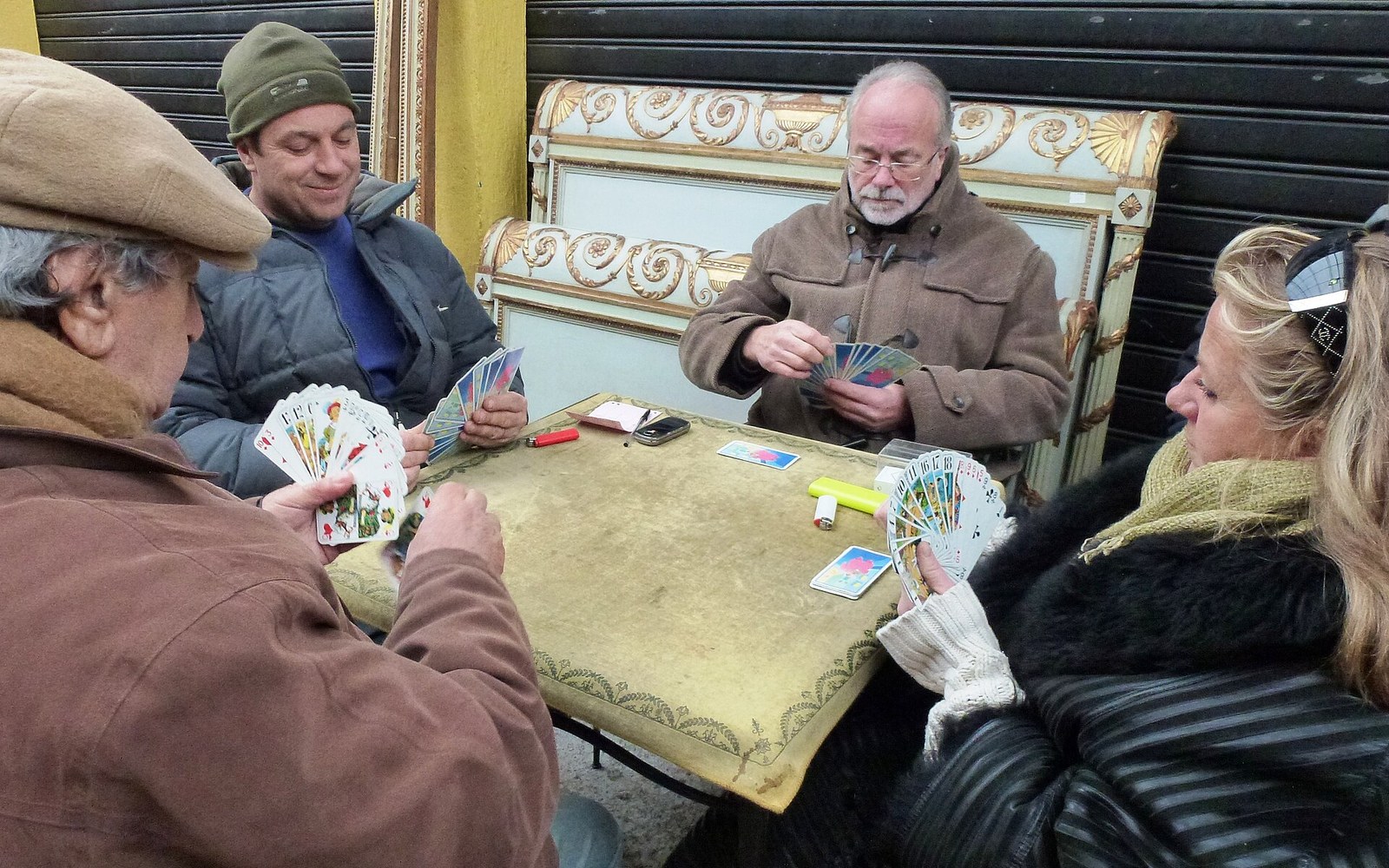
The game, still being played, where the word changed spelling.
Photo: Joueurs de tarot · Wikimedia Commons
A Printer's Trail
The Italian tarocchi — plural of tarocco — appears in documented records from the mid-fifteenth century, most notably in Ferrara court accounts that record payments for card sets. The root is contested: some philologists connect it to tarocco as a word for foolishness or stupidity, which would give the trump sequence a faintly self-deprecating origin; others find no clean derivation. The record does not show a single coinage moment, only a word already in use when the scribes wrote it down.
French speakers encountered the game through the Alpine passes and across the Savoy territories. By the sixteenth century, French texts were already writing "tarot" — dropping the Italian plural suffix and treating the word as a singular noun for the game and its equipment. The transformation was phonetic and typographic at once: French compositors had no use for a terminal -chi, and the resulting five-letter form was cleaner on a title page.
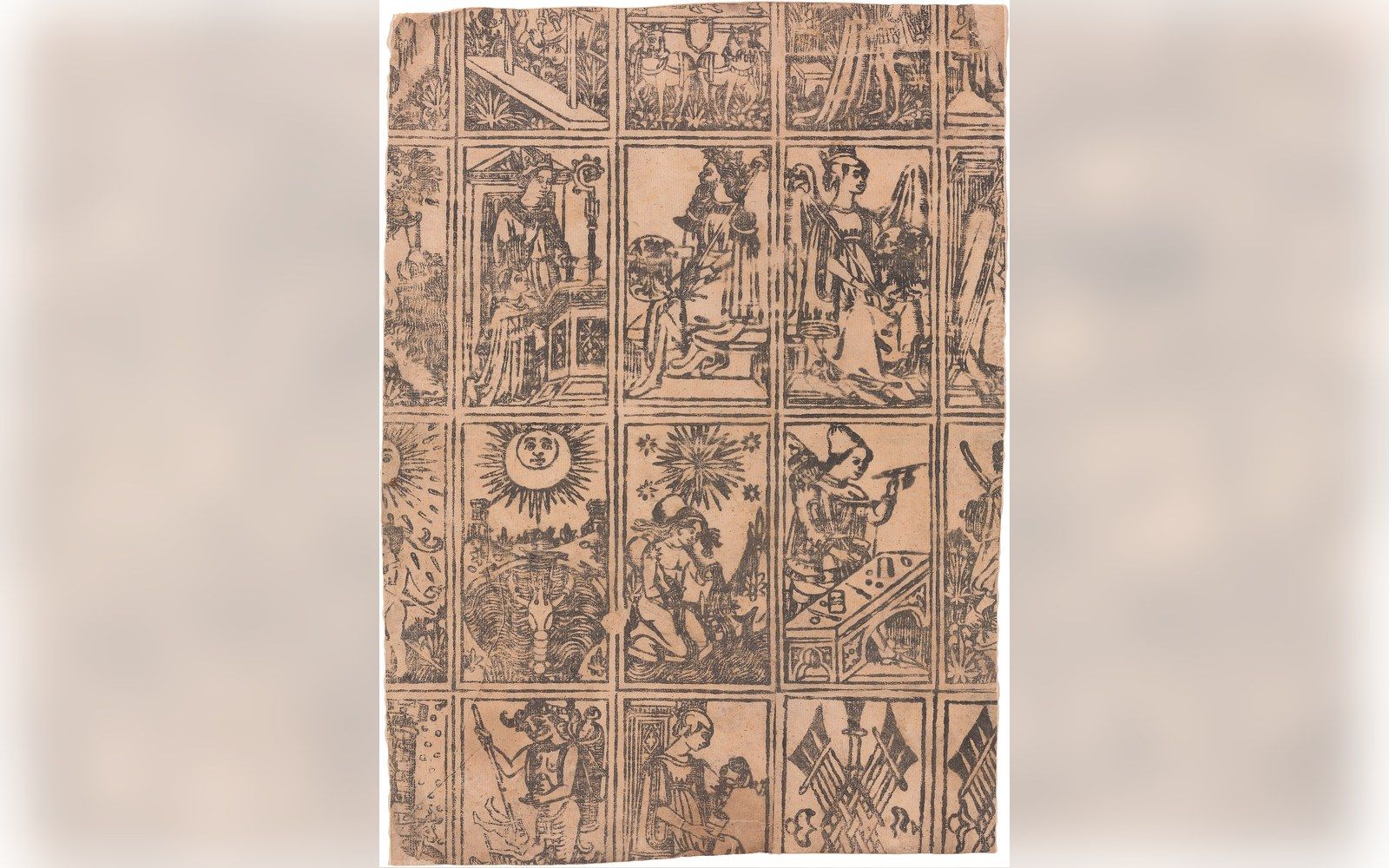
An uncut Italian sheet, c.1500. The collection’s strength is production, not play.
Photo: Tarot-cary-collection-ita-sheet-3s-c1500. · Wikimedia Commons
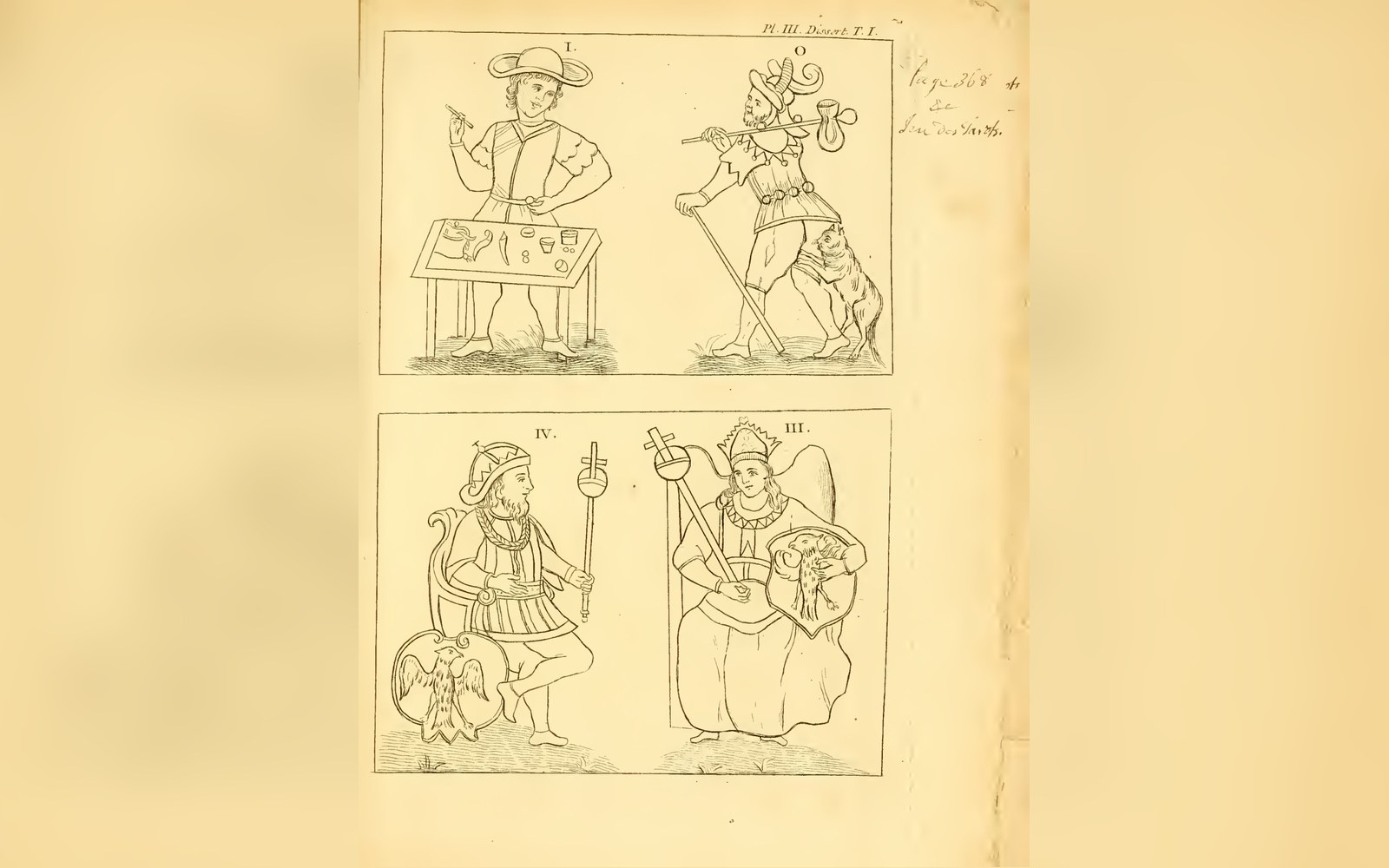
Plate III of the eighth volume: the Paris cards redrawn as evidence for a civilisation that was never there.
Photo: Court de Gébelin - Monde Primitif T. 8 Pl. 03 · Wikimedia Commons
The English adoption came later, and it came through France rather than Italy. English writers encountered the cards largely through French-language literature, so the French spelling was the one that stuck. Antoine Court de Gébelin's 1781 speculations in Le Monde Primitif circulated in French, and when English commentators — including, eventually, Arthur Edward Waite — wrote about the cards, tarot was the form they used. By 1909, when William Rider and Son published the deck now universally associated with Waite and Pamela Colman Smith, tarot was the only English spelling that publishing practice recognised.
What the journey reveals is less about linguistics than about the geography of print. The word standardised wherever cards were commercially manufactured and distributed — Ferrara and Milan in the fifteenth century, the French card-printing centres by the sixteenth, London by the twentieth. Each stage of production fixed a spelling, and the fixings held.